3D Harmonic Model © 2016~2025
US Patent #: 9947304.
Foreword:
My purpose with the following pages is to show in methodical detail how the 3D Harmonic Model is constructed. If you would rather see what the model's applications are, follow the link "Open the slide show."
As music is about modulation, the model provides a visual framework to explore all modal possibilities in a 3D space. Keep in mind that any software using the model will have to show only the essential logic going from one scale or chord to another without needing to display the whole model at all times. Although the geometry presented here is critical, the graphics may be changed. It is a work in progress, but I feel that my knowledge of the model has matured enough to present it here — despite the limitations of a 2D web page. I'm also hoping to attract software engineers or mathemusic aficionados who would be interested in getting involved, as well as investors or donations to keep the project going. I am also currently working on 3DCompose ©, an application that uses the model.
Comments are welcome! You may reach me at: francis@tritonlogic.net
A few things to note:
I will use —n.v.— to mean: numerical value.
0, the numerical value for C, can be thought of as 0 or 12.
The model utilizes only 'flat' alterations -- no sharps!
For the purpose of navigation:
I find it easier to exit the zoomed-in images from the top or sides.
You can download the .gif and open them in an image editor to look at each slide separately.
As music is about modulation, the model provides a visual framework to explore all modal possibilities in a 3D space. Keep in mind that any software using the model will have to show only the essential logic going from one scale or chord to another without needing to display the whole model at all times. Although the geometry presented here is critical, the graphics may be changed. It is a work in progress, but I feel that my knowledge of the model has matured enough to present it here — despite the limitations of a 2D web page. I'm also hoping to attract software engineers or mathemusic aficionados who would be interested in getting involved, as well as investors or donations to keep the project going. I am also currently working on 3DCompose ©, an application that uses the model.
Comments are welcome! You may reach me at: francis@tritonlogic.net
A few things to note:
I will use —n.v.— to mean: numerical value.
0, the numerical value for C, can be thought of as 0 or 12.
The model utilizes only 'flat' alterations -- no sharps!
For the purpose of navigation:
I find it easier to exit the zoomed-in images from the top or sides.
You can download the .gif and open them in an image editor to look at each slide separately.
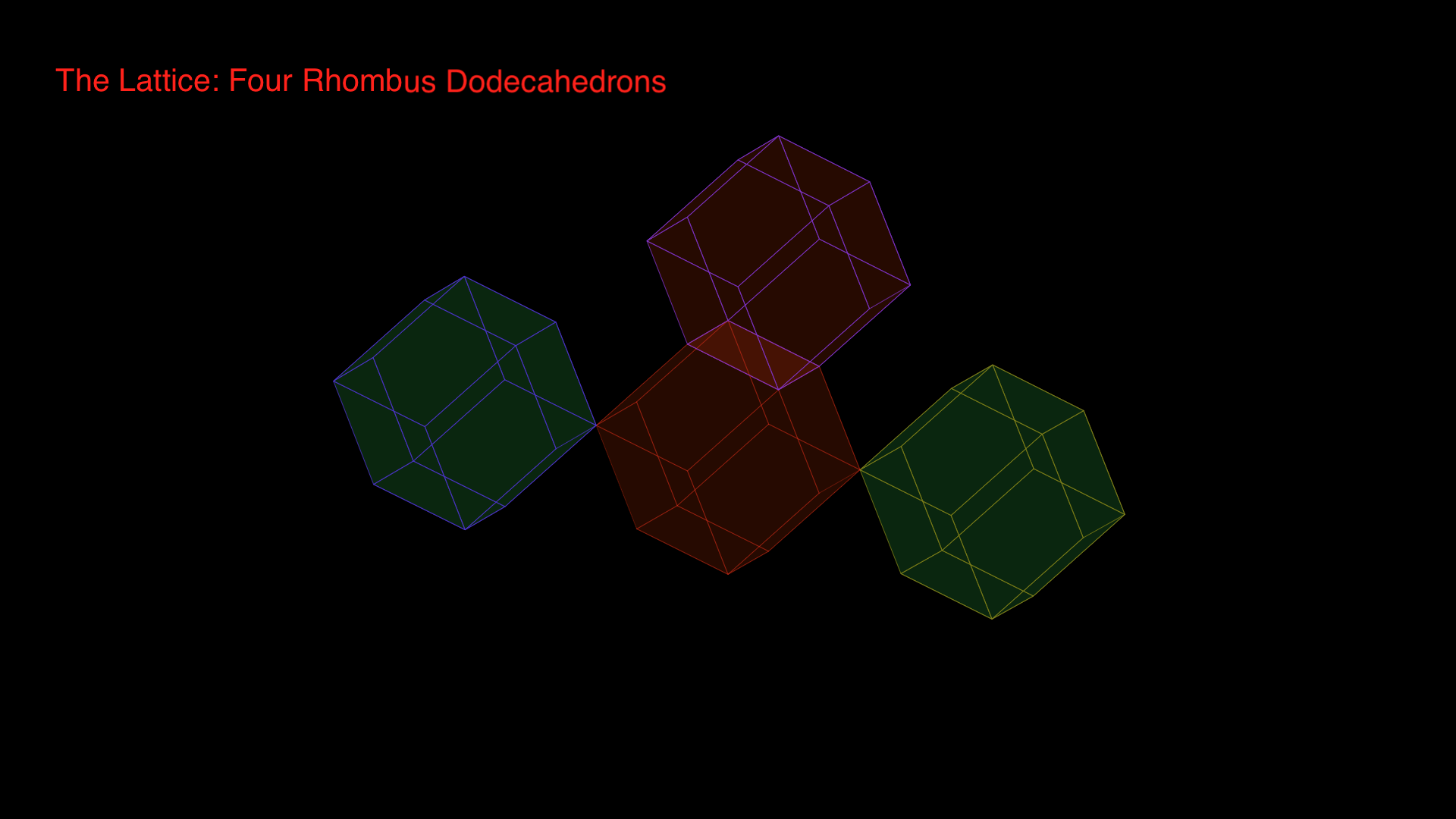
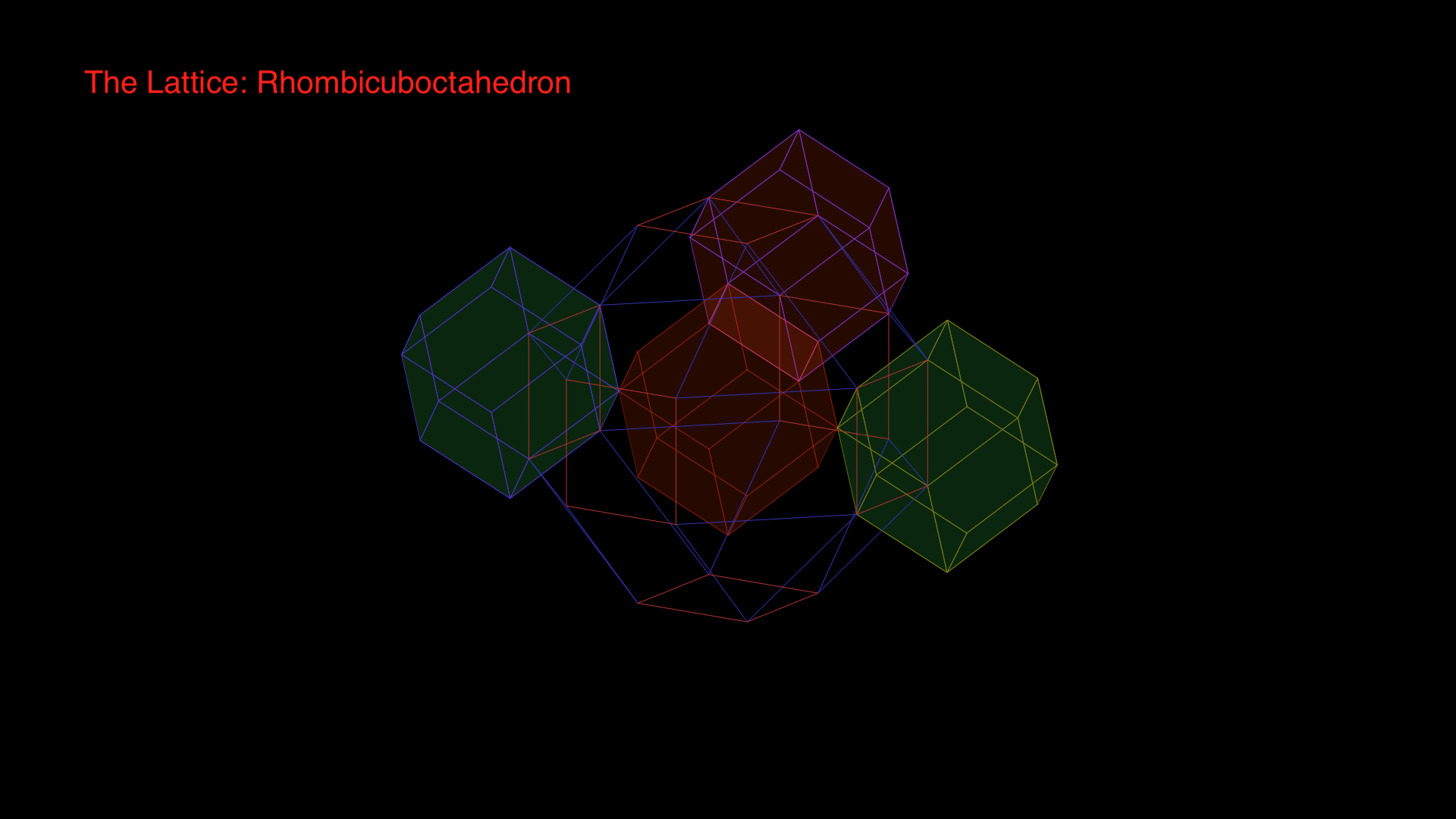
The model is built on a
Rhombus Dodecahedron
lattice and focuses on the dynamism of two 3D structures -or context- within that lattice.
fig.1
Four Rhombus Dodecahedrons
Within this lattice a rhombicuboctahedron can be isolated.
fig.2
Rhombicuboctahedron
And within a rhombicuboctahedron, two groups of twelve notes can be isolated:The "Diminished Context" and the "Augmented Context."
fig.3 The Diminished Context
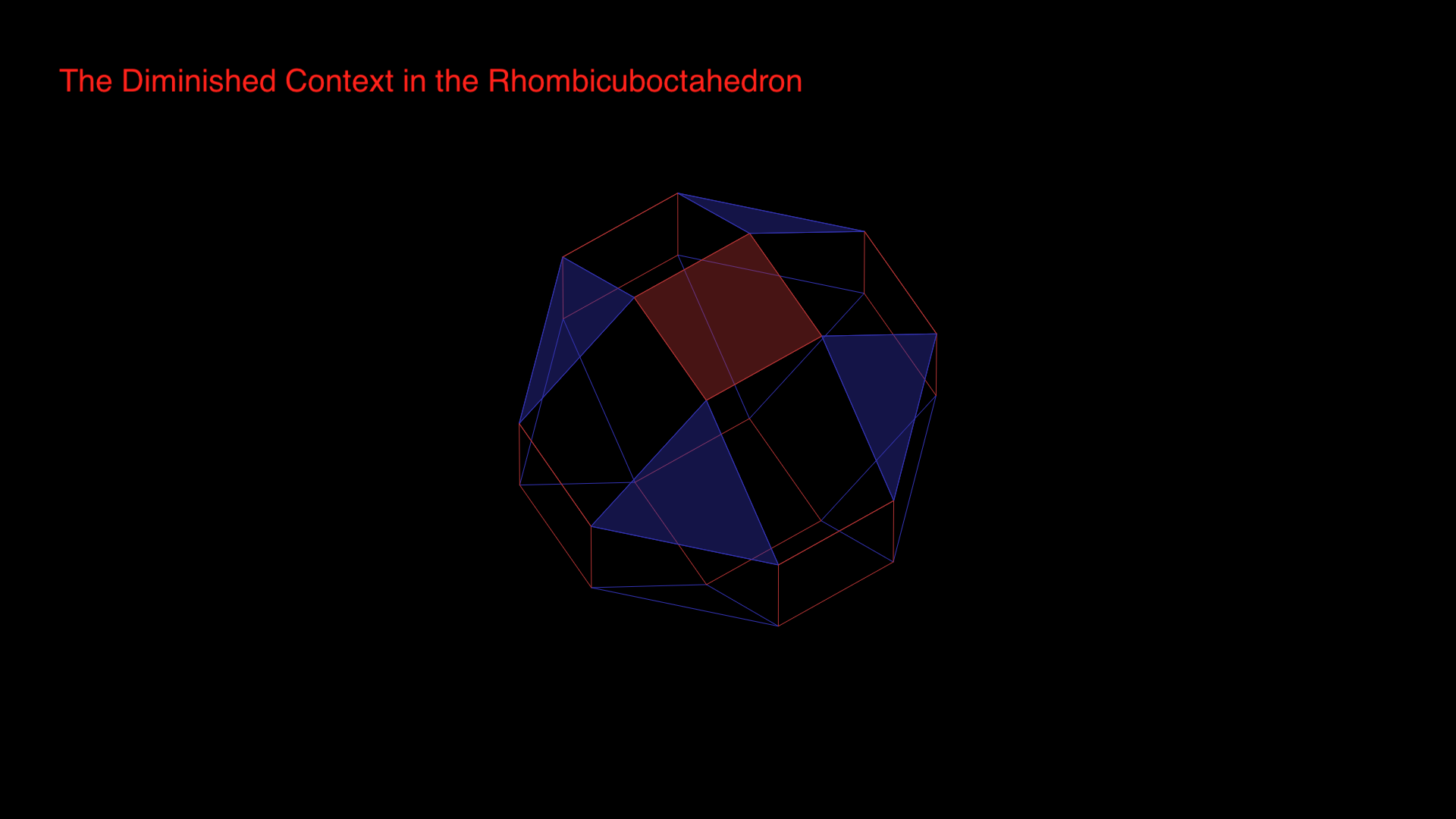
fig.4 The Augmented Context
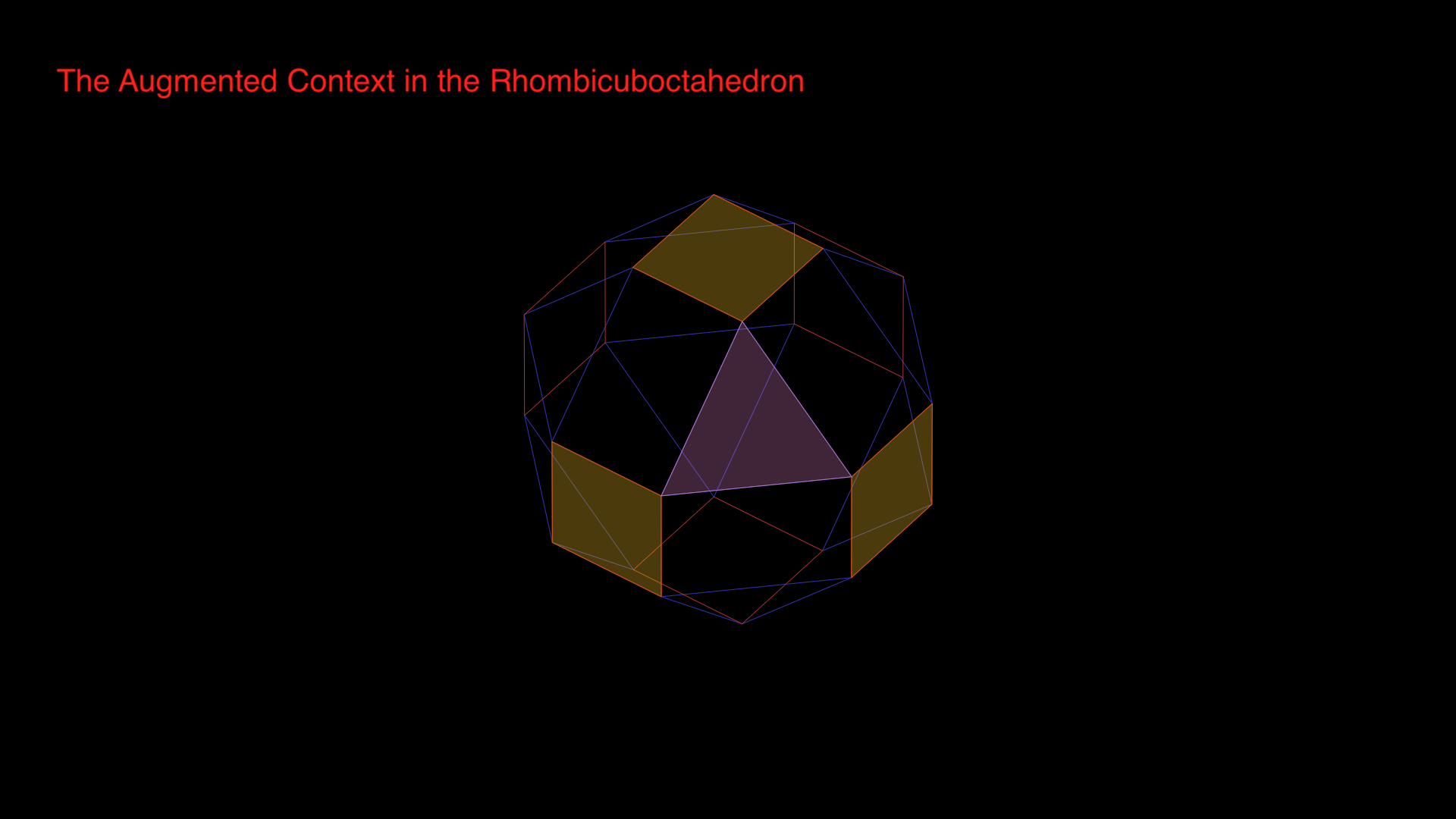
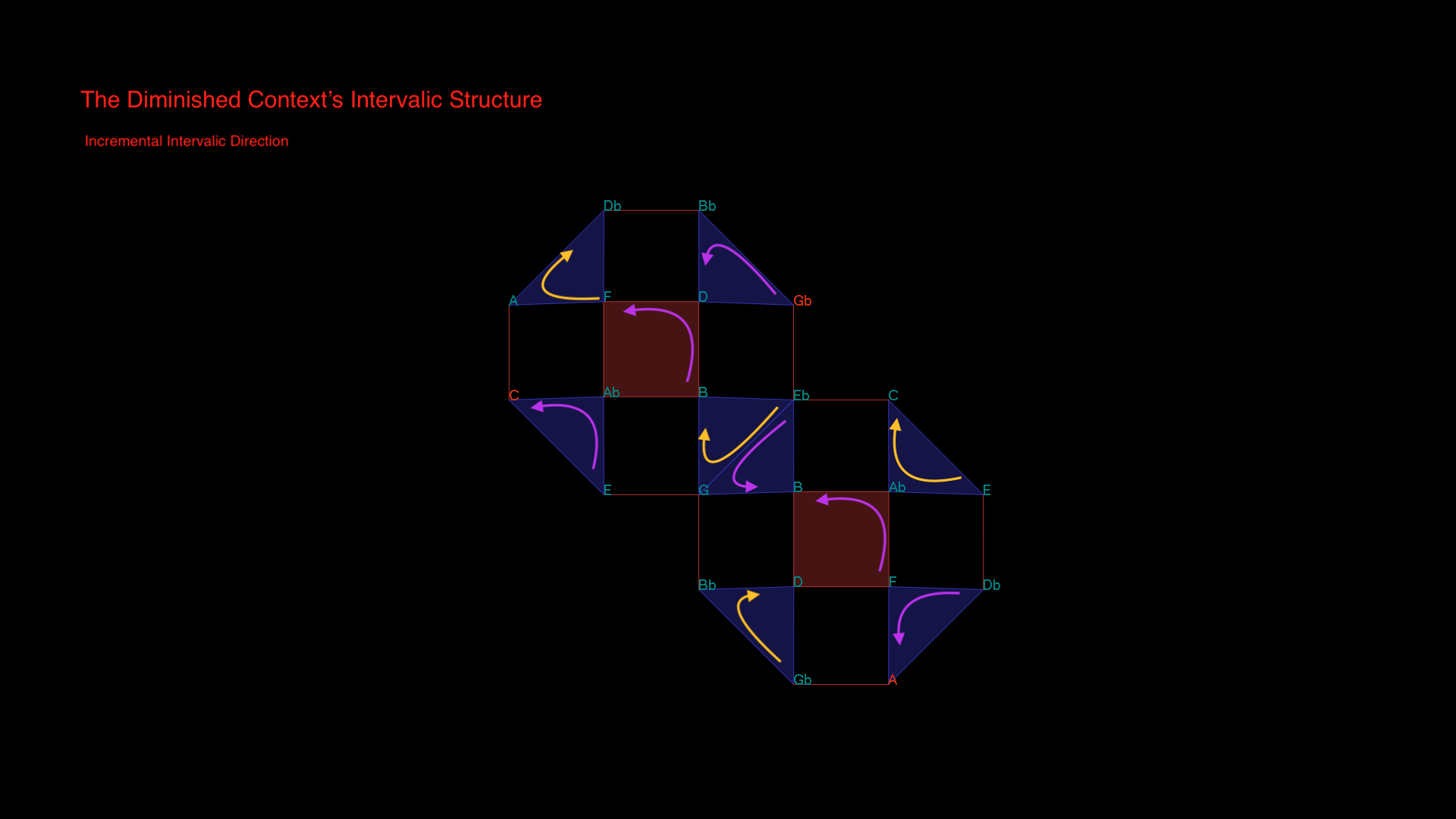
We'll take a look below at the intervallic structure of each context. It can be expressed with musical notes or with numbers ( 0 ~ 11 ). The contexts are made up of two kinds of adjacent intervals: the triangles' blue lines are major thirds — n.v. 4 — and the squares' red lines are minor thirds — n.v. 3.
fig.5 The Diminished Context's Intervallic Structure
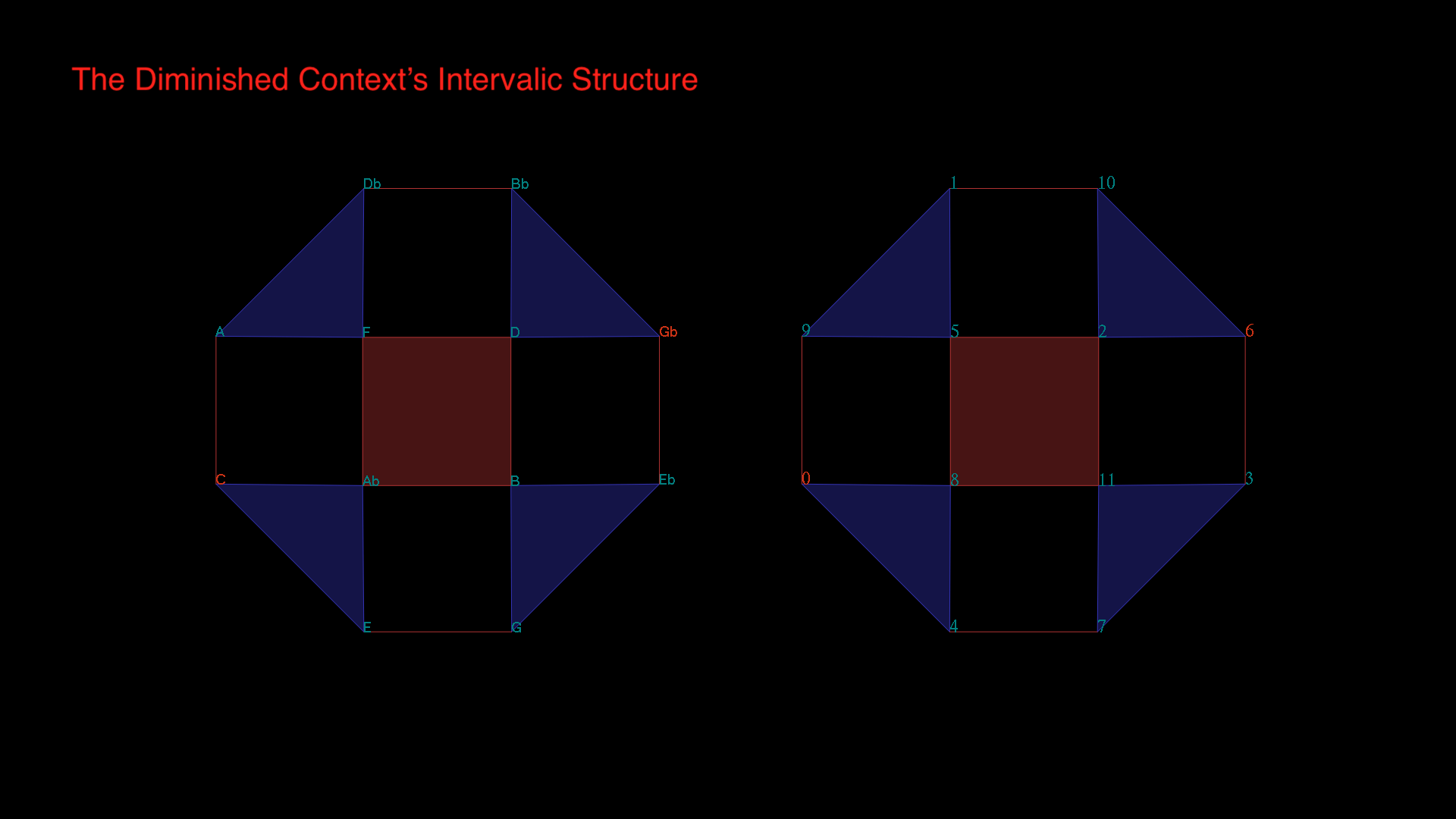
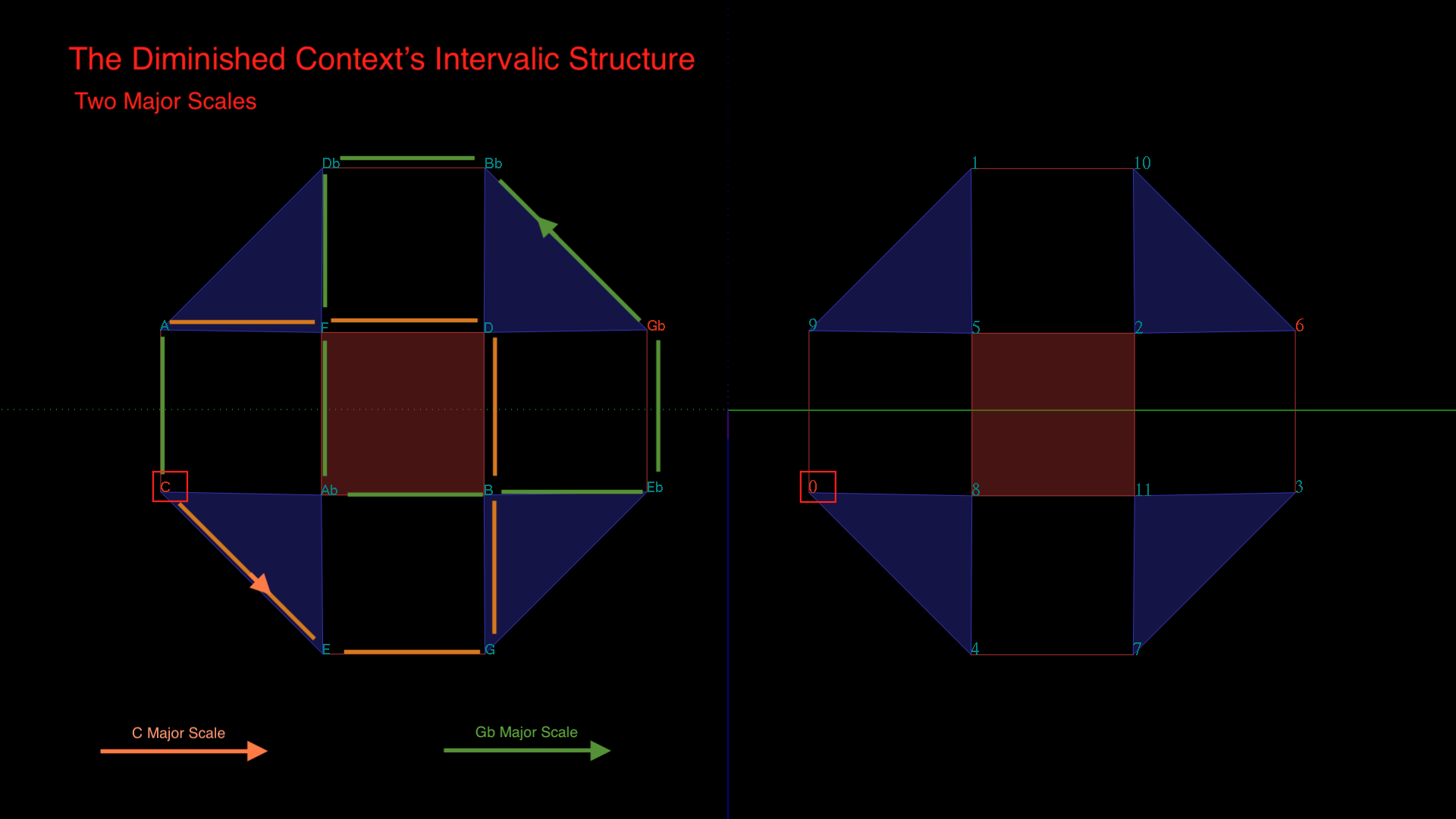
Two major scales, spelled in thirds, are the diminished context's principal feature. Here the C and Gb major scale are highlighted respectively in orange and green.
— A major scale has the numerical values: 0-2-4-5-7-9-11
fig.5a Two Major Scales
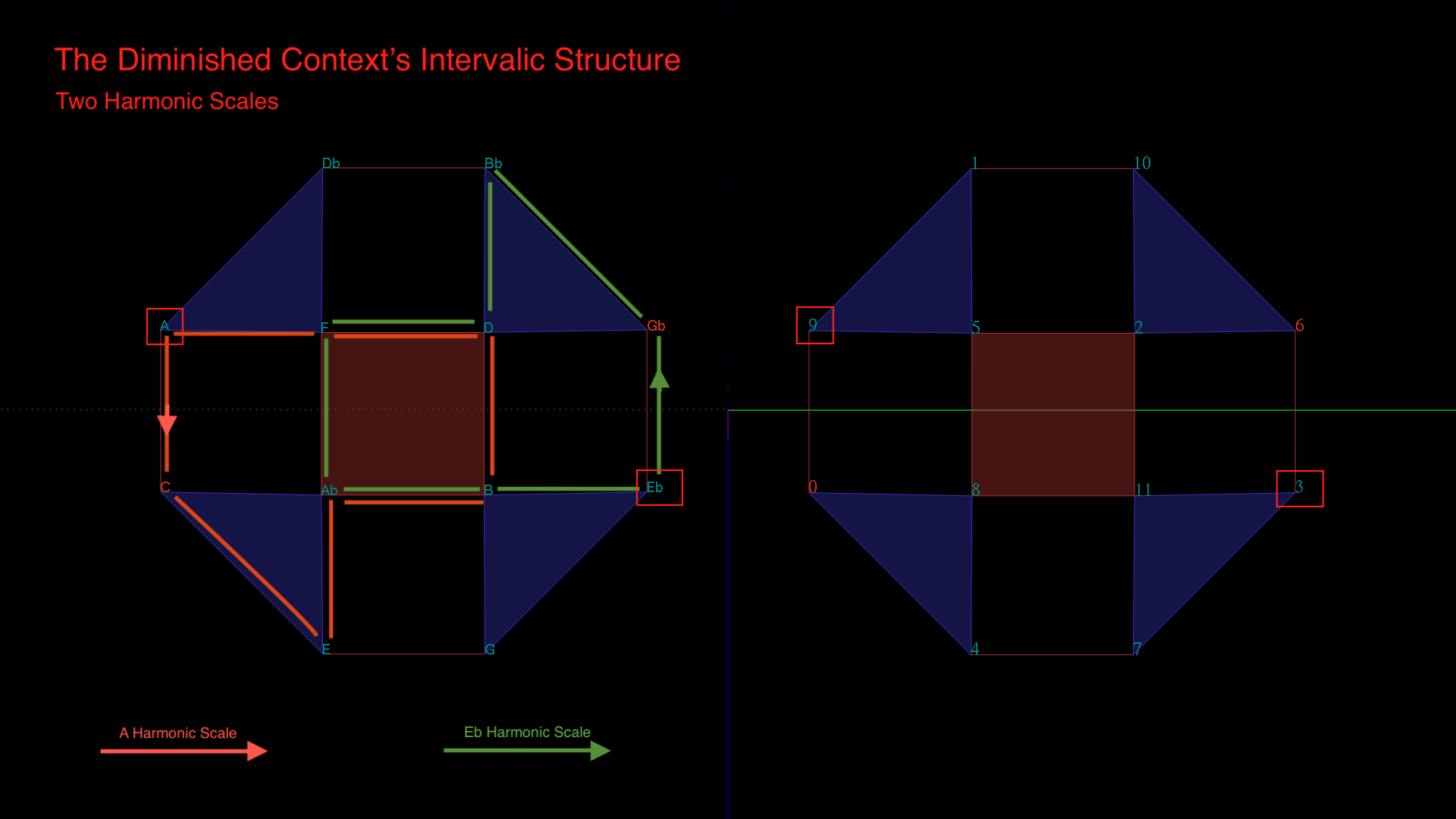
Along with two harmonic scales: A and E harmonic.
— A minor harmonic scale has the numerical values: 0-2-3-5-7-8-11
— A minor harmonic scale has the numerical values: 0-2-3-5-7-8-11
fig.5b Two Harmonic Scales
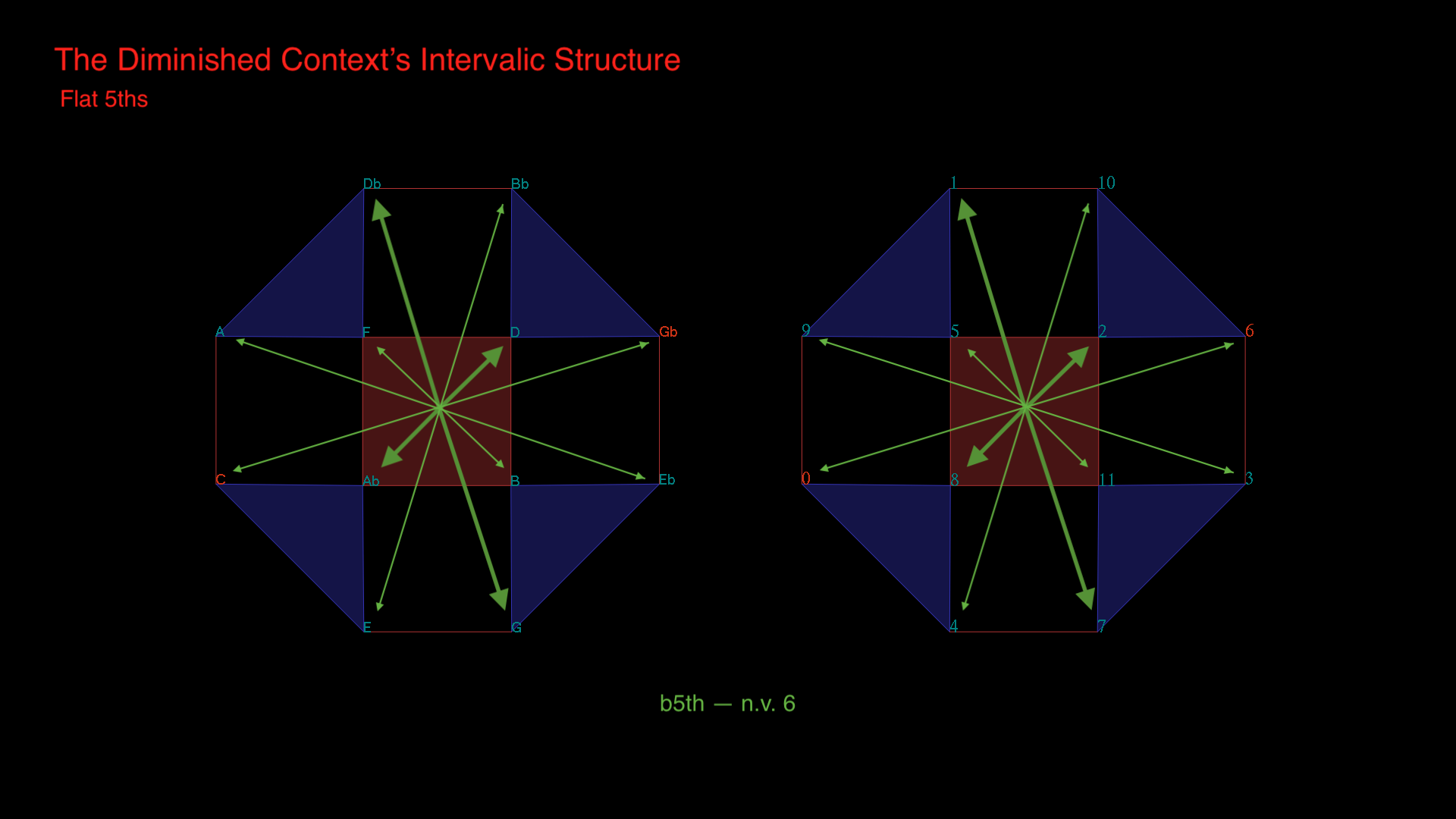
All the notes have their diminished fifth — n.v. 6 — symmetrically placed (as seen on a plane) in relation to the context's geometric center.
fig.5c Diminished Fifths
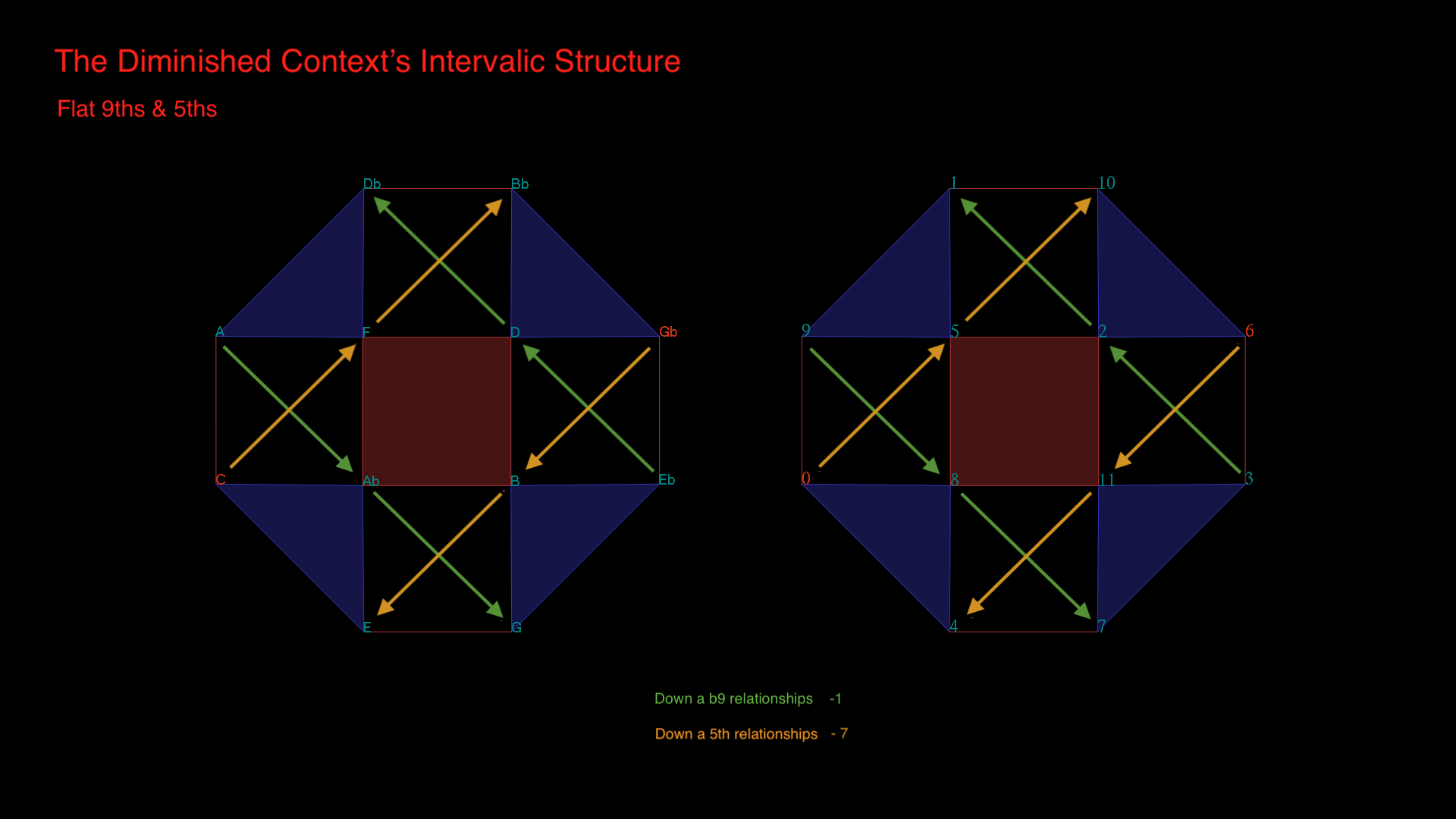
Intervallic relationships of a flat nine — n.v. 1 — and of a fifth — n.v. -7 — are shown here respectively in green and orange.
fig.5d Flat Ninths and Fifths
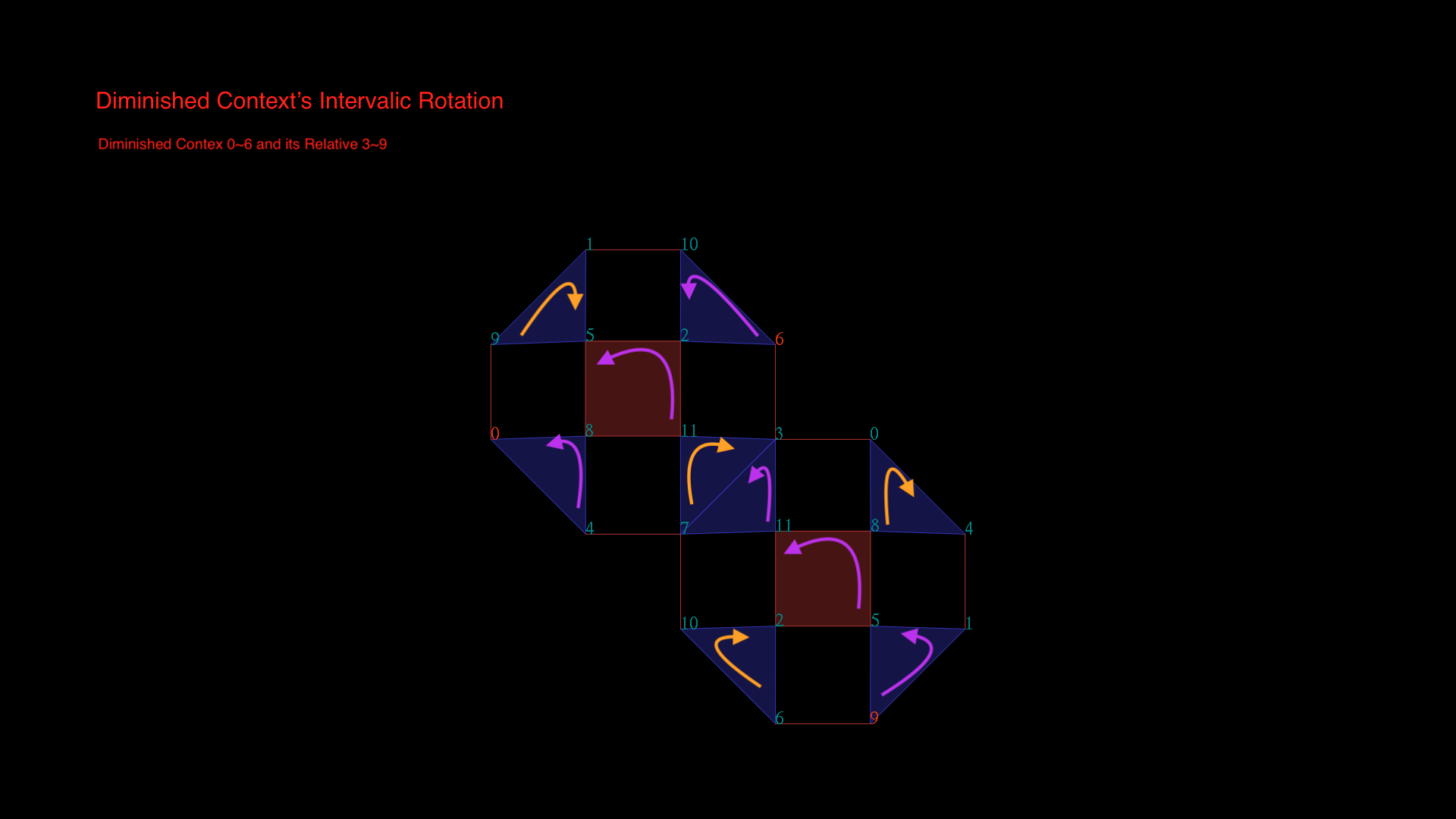
For a given square, there can only be two possible resulting diminished contexts. This result depends on the square's and triangle's incremental intervallic direction. When the triangle rotates in the same direction as the square it holds the tonal root (indicated in red).
fig.5e & fig.5f Rotation
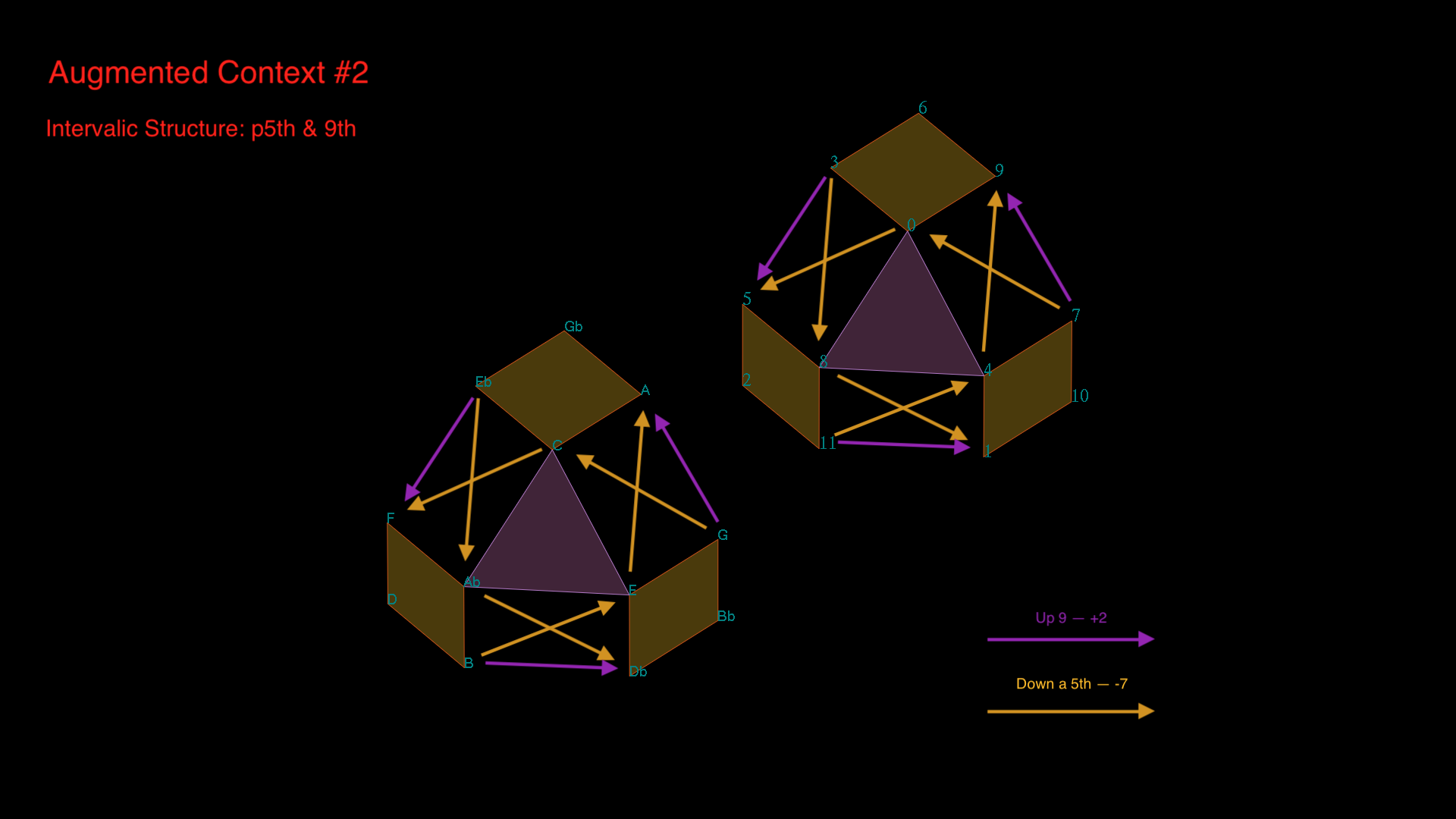
There are two types of augmented contexts. Both have natural ninth relationships — n.v. 2 — highlighted here in purple. One type has some flat ninths — n.v. 1 — in green, the other perfect fifths — n.v. 5 — in yellow.
fig.6a Context #1: Natural Ninths and Flat Ninths
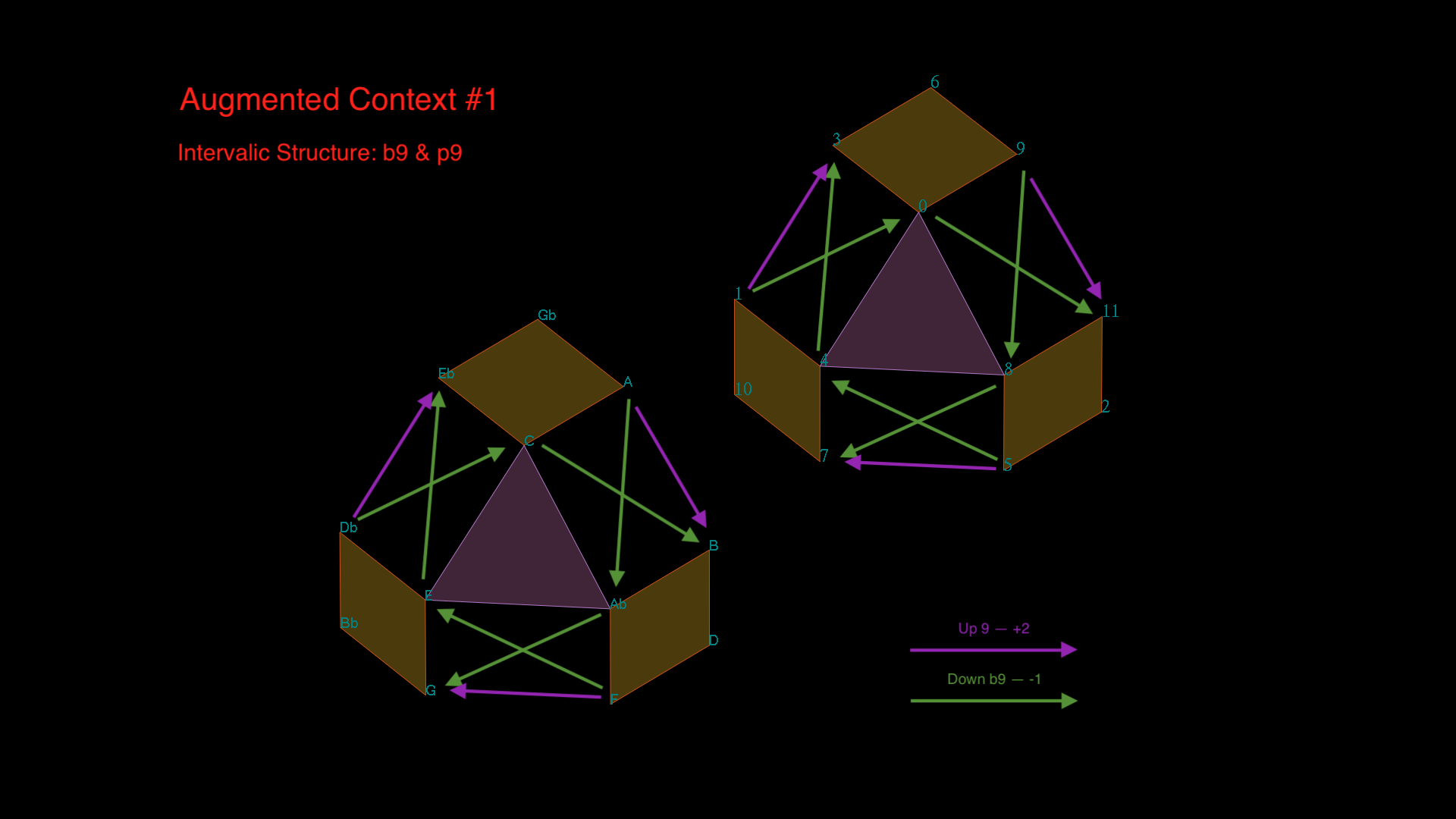
fig.6b Context #2: Natural Ninths and Natural Fifths
The difference between the two contexts is generated by the direction of the intervallic incrementation within both the triangles and the squares.
fig.7 'Rotation' / Fifths & Flat Ninths
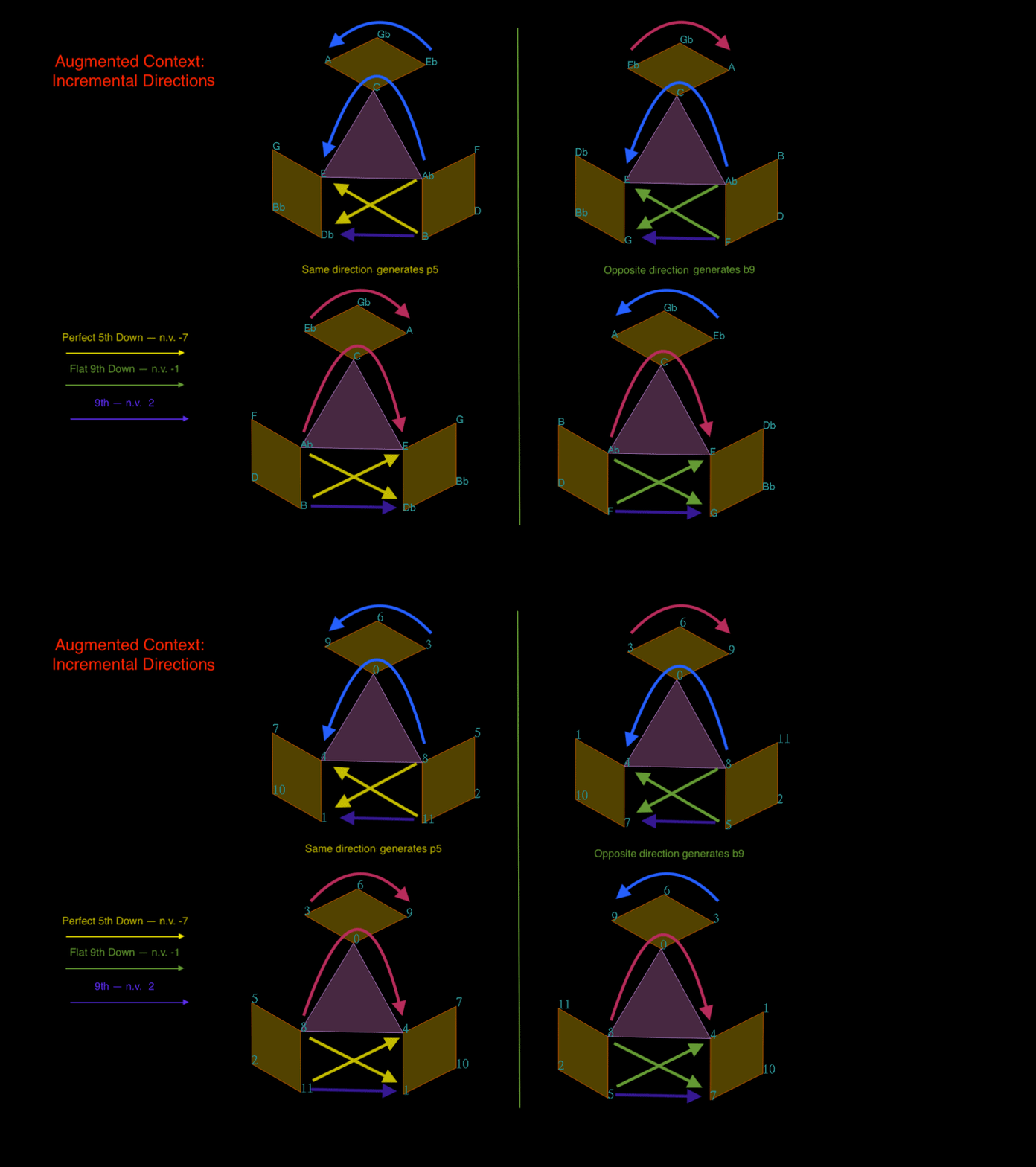
The same direction generates fifths; the opposite direction, flat ninths. As the augmented and diminished contexts relate to each other, we'll see that the possible resulting diminished contexts will be predictably a minor third apart — n.v. 3.
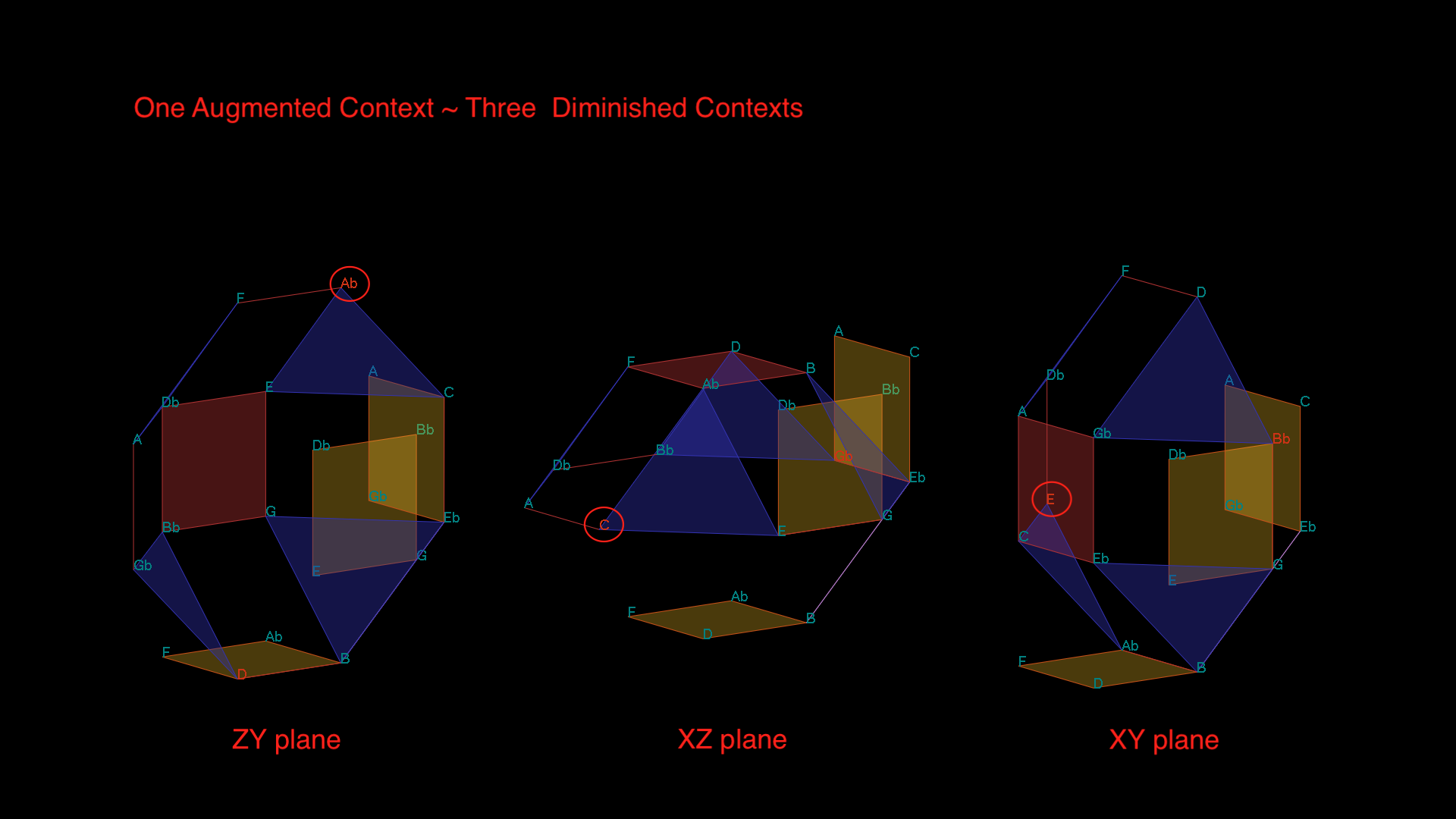
fig.8 Diminished/Augmented relationship in the XZ plane
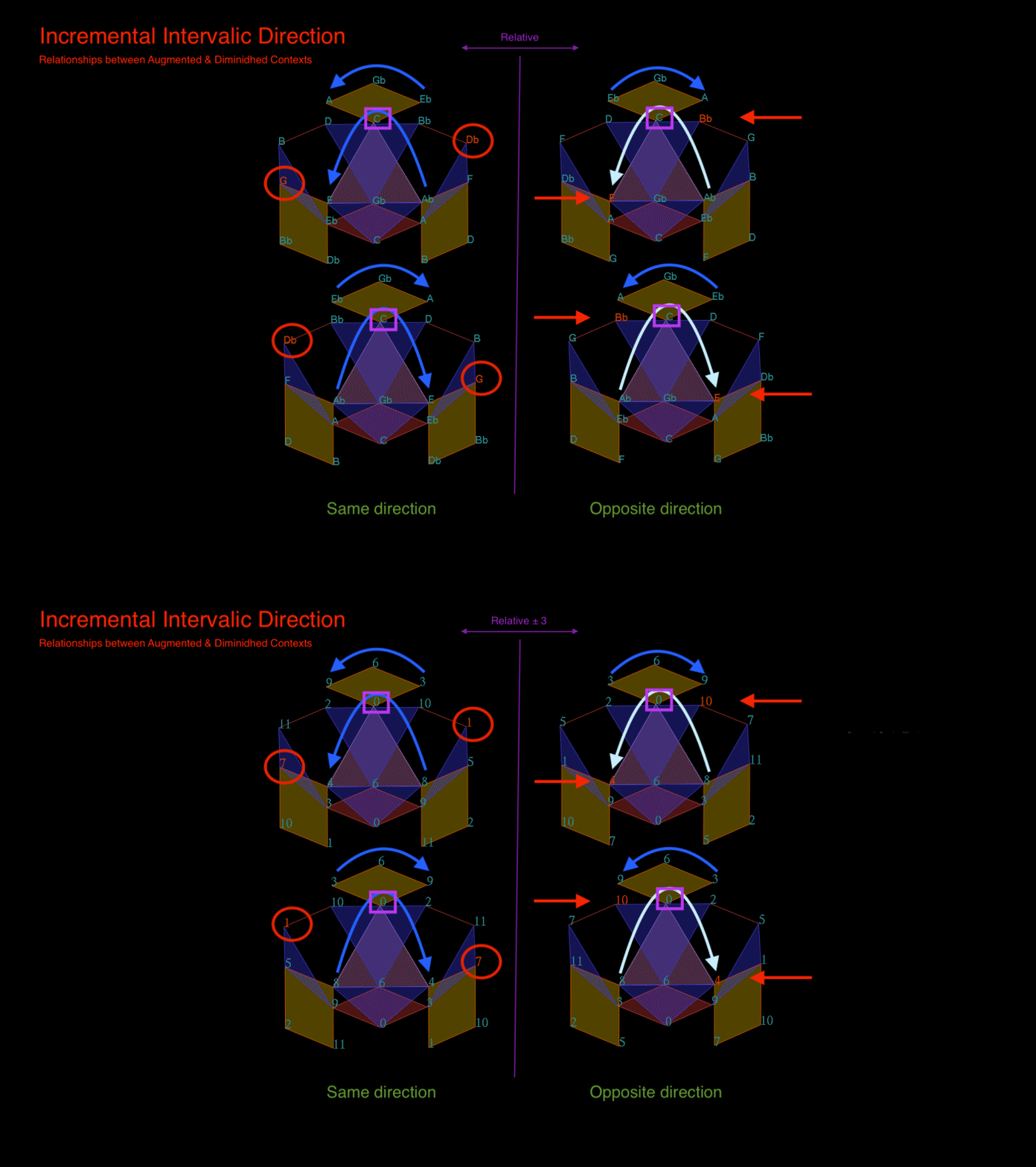
In the previous slide, we were centered on the note C — n.v. 0. But since there is no 'Up' nor 'Down' in a 3D space, the same is true if we consider each of the triangle's notes!:
fig.9 Diminished/Augmented relationship in the ZY plane
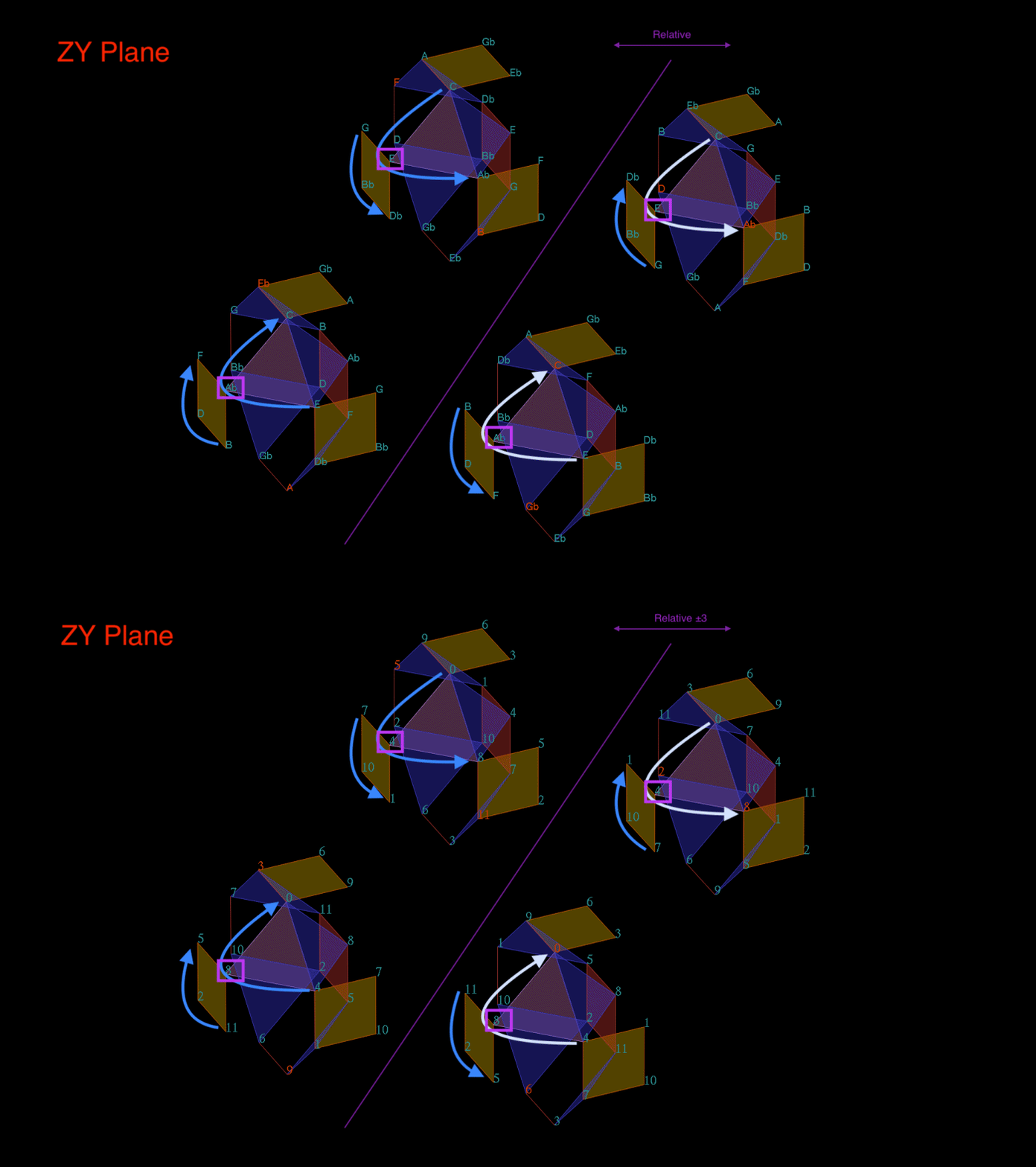
fig.10 Diminished/Augmented relationship in the XY plane
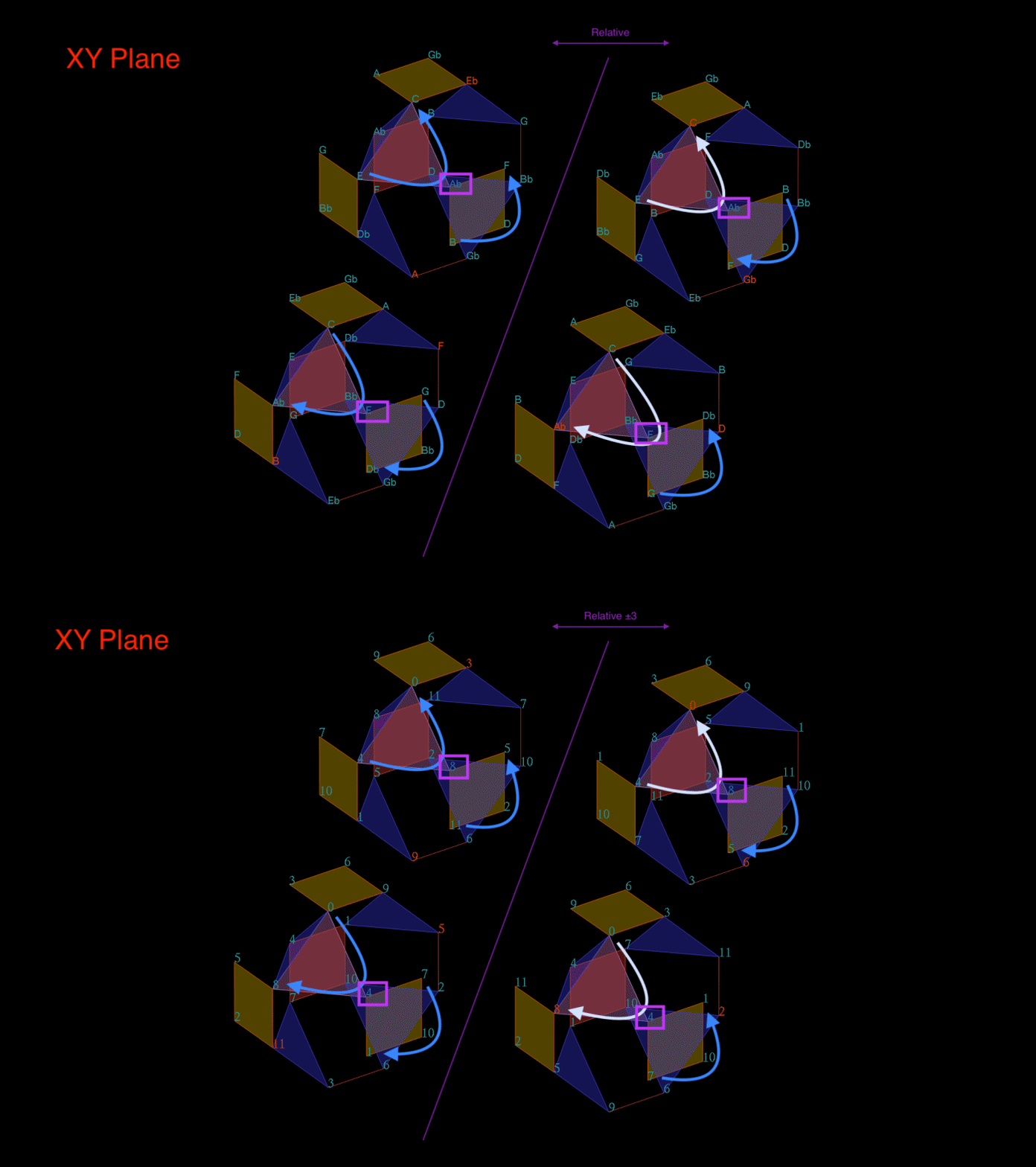
You may have noticed, fig.8 through fig.10 shows how the same augmented context relates to three diminished contexts a major third apart — n.v. 4.
fig.10b Three Possible Diminished Contexts For One Augmented Context
Relative Relationships
In the next slide we see how the diminished context propagates 'naturally' on a plane. It shows also the triangles' and squares' rotations, which produce four tonal centers: 'C', 'Gb', 'Eb' & 'A', thus creating a 'relative' relationship between contexts — n.v. 0, 6 ~ 3, 9.
fig.11a The Diminished Plane: Four Tonalities
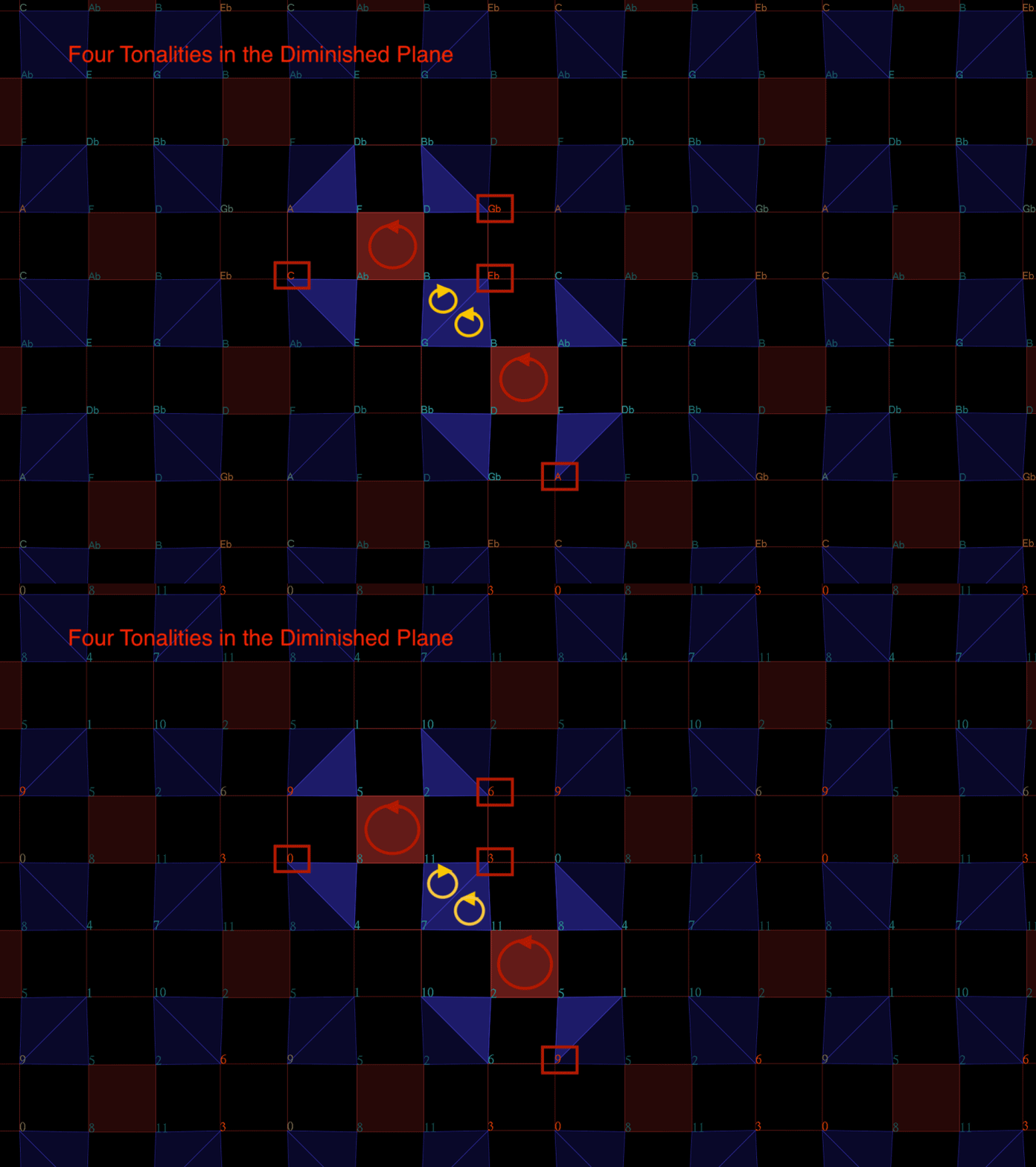
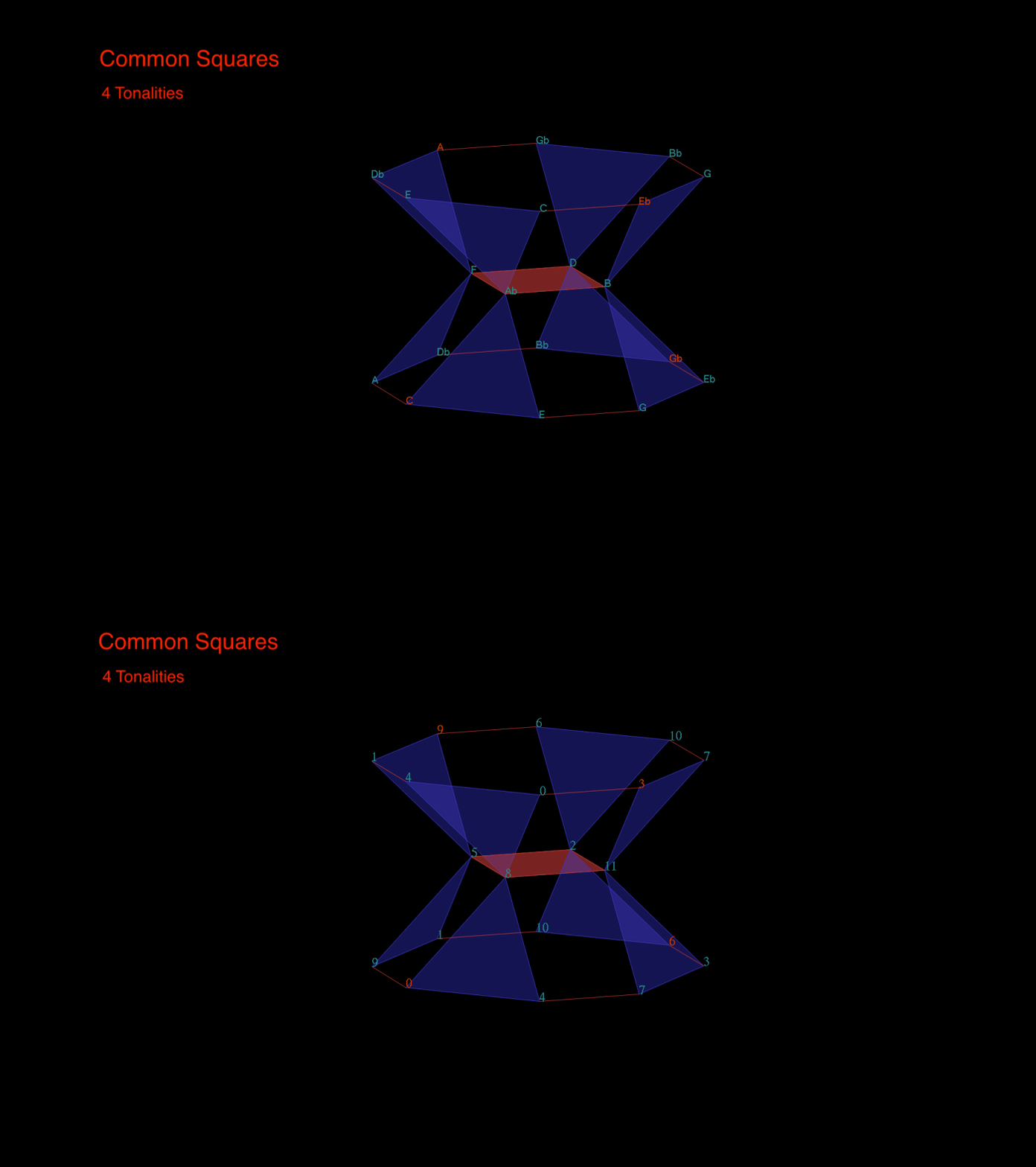
However this relationship can be represented in a different way, which will be useful when showing common tones that belong to squares:
fig.11b The Same Four Tonalities in the 3D Space
Concentric Fifth Relationships
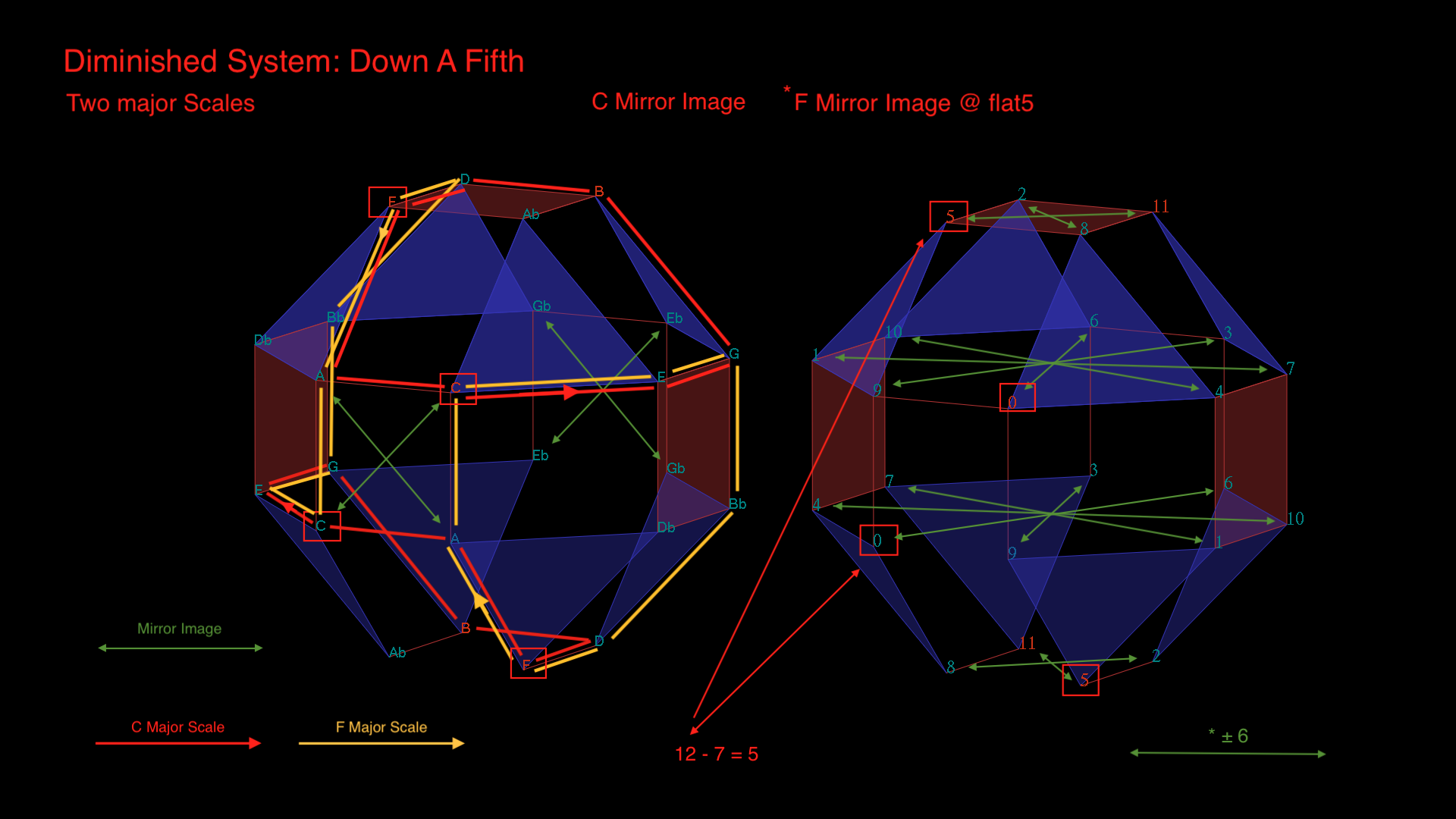
Following the contours of a rhombicuboctahedron and taking half the notes of a diminished context, we can generate another context, a fifth apart, up or down — n.v. ± 7. Here, we look at a ‘down a fifth’ context, with the C and F — n.v. 0 and 5 — major scale highlighted respectively in red and yellow.
fig.12a Down a Fifth - Diminished System
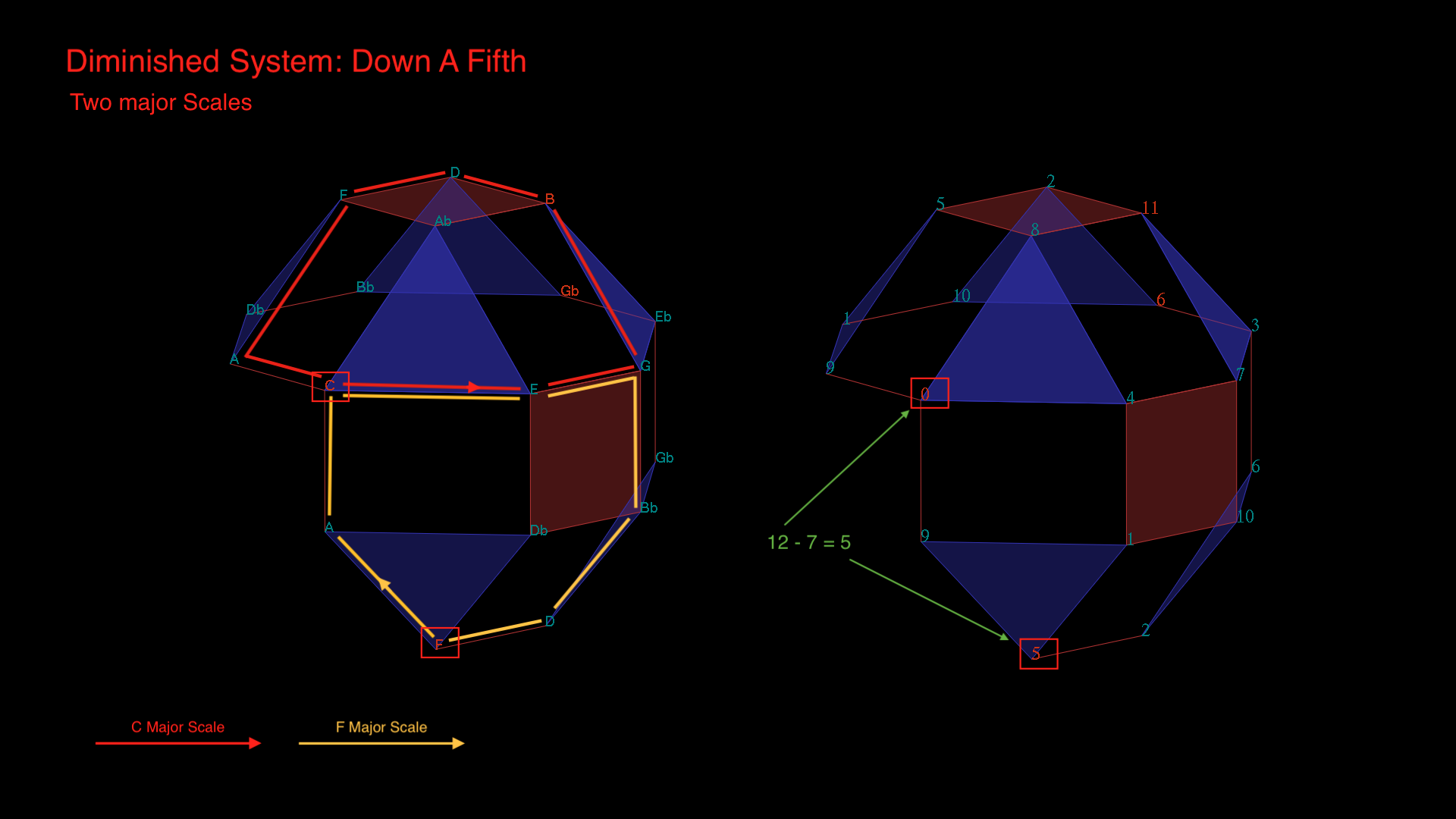
Because all the notes within the diminished context are placed symmetrically a flat five apart in a plane — n.v. 6 — a second ‘down a fifth’ context can also be generated a flat five away from its counterpart (a mirror image of sorts). Notice that our first C/Gb — n.v. 0/6 — context is also mirrored on the lower part of the rhombicuboctahedron (a 'true' mirror image).
fig.12b Down a Fifth - Rhombicuboctahedron
If we populate a plane 90º from the ‘down a fifth’ context's plane, we get an 'up a fifth' relationship — n.v. 7. from our first C/Gb context.
fig.12c Up a Fifth - Diminished System
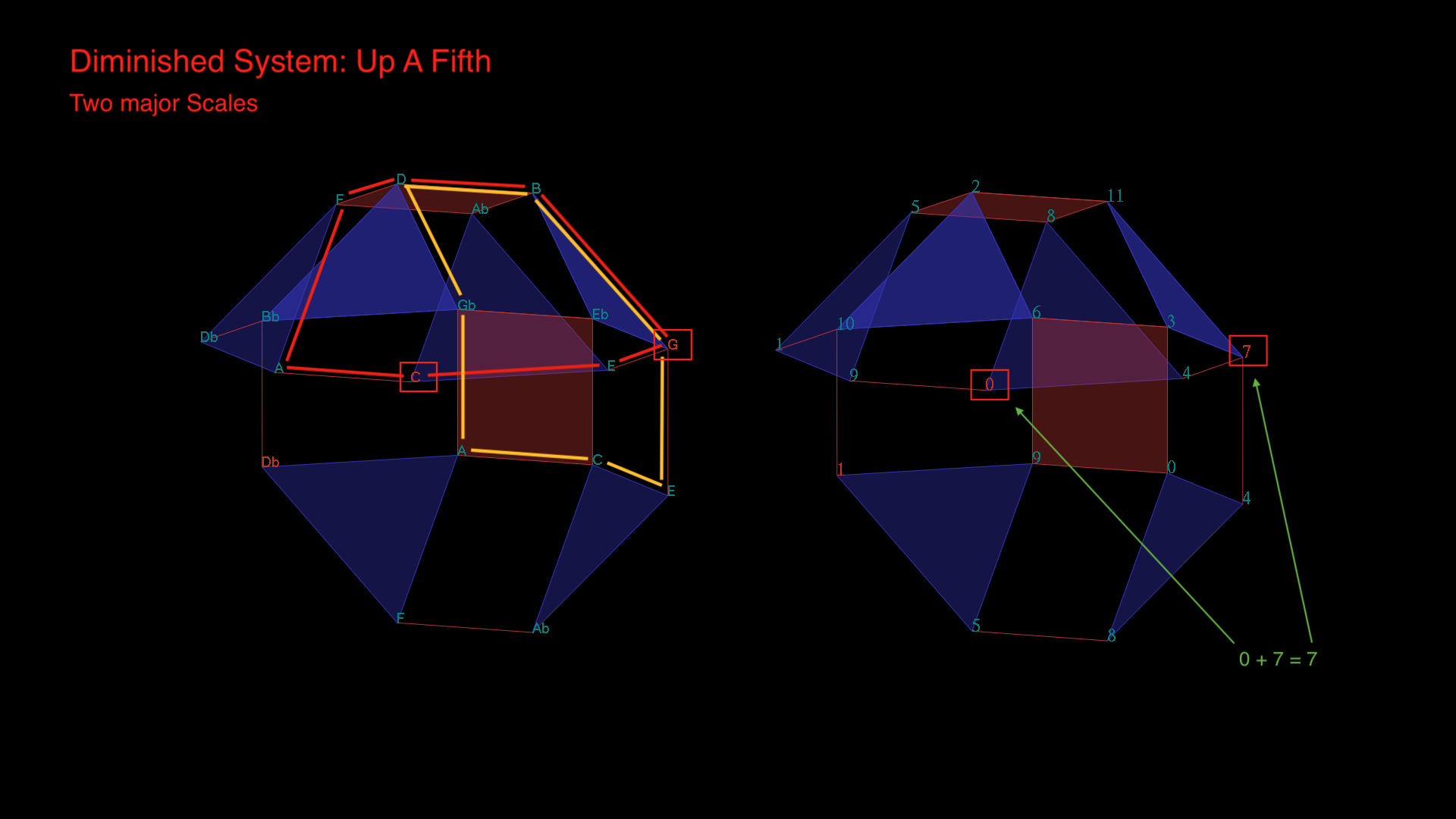
Of course, just like the down a fifth context, the up a fifth context will be mirrored across the rhombicuboctahedron.
Depending on whether one looks at a context down or up a fifth, the context opposite to the one we started from — C/Gb — will alternate between itself and its opposite, a flat fifth apart — n.v. 6. The C major scale is highlighted in red, the F and G scales in yellow.
fig.12d Two Possible Outcome: A Flat Fifth Apart
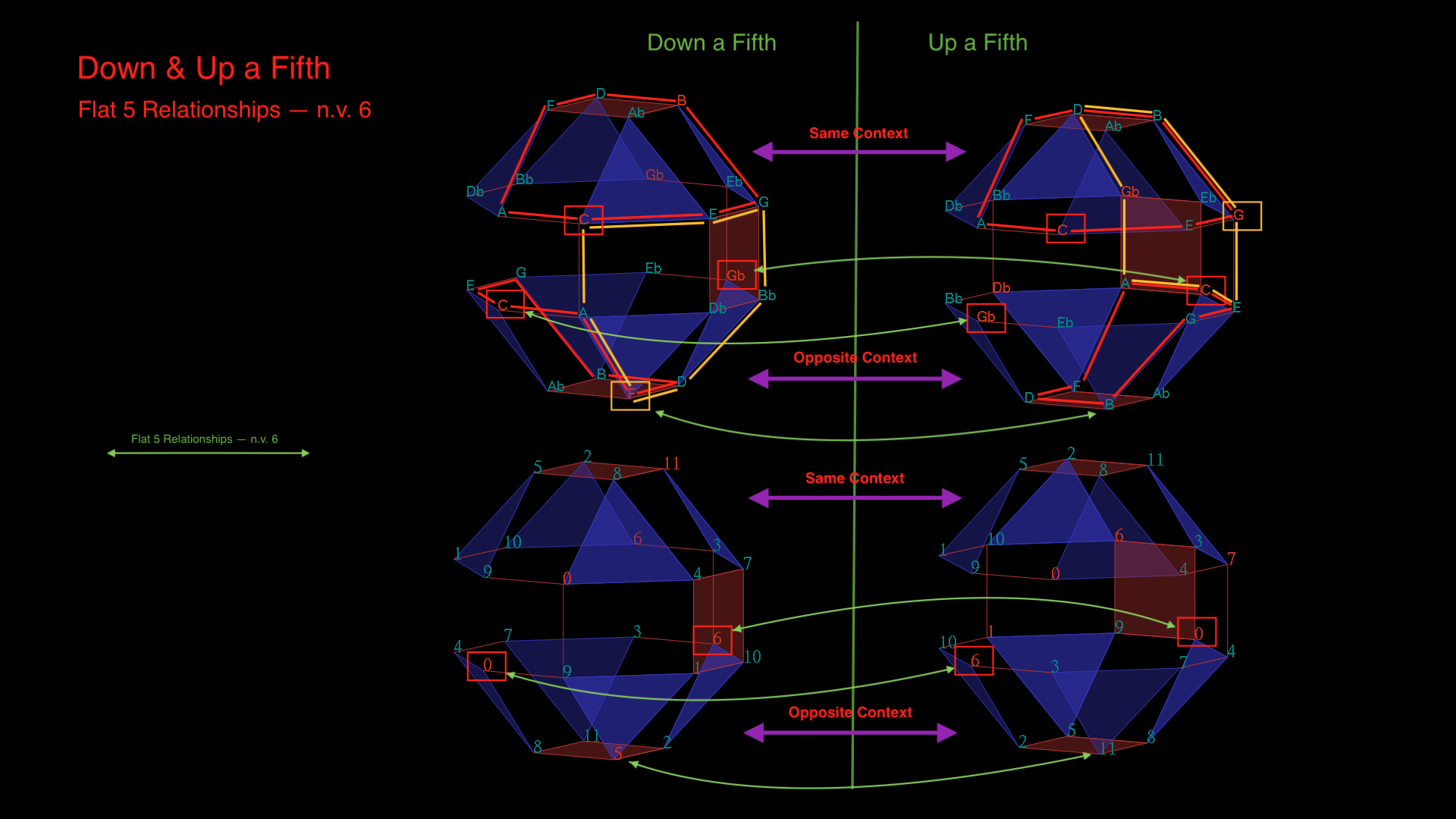
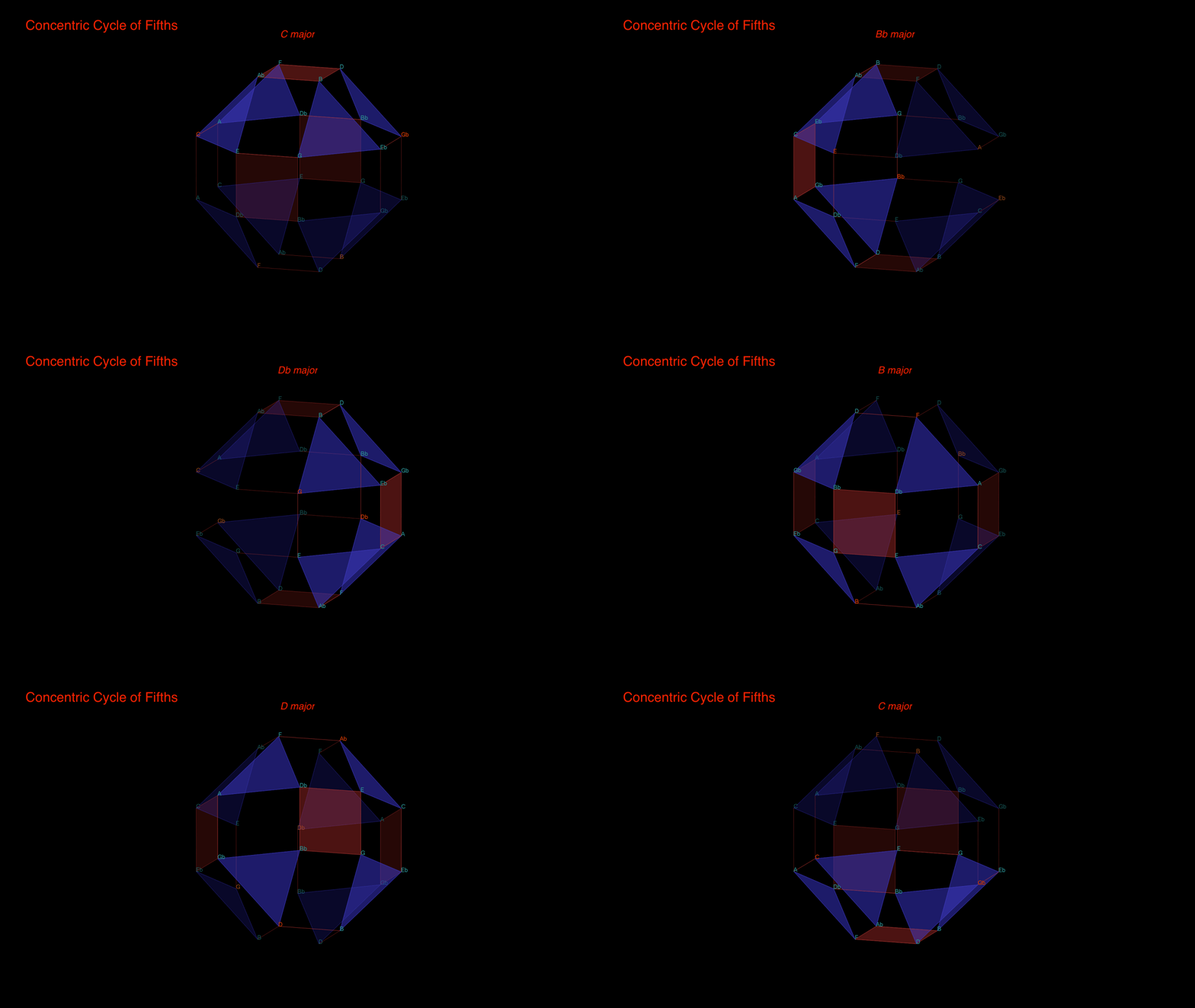
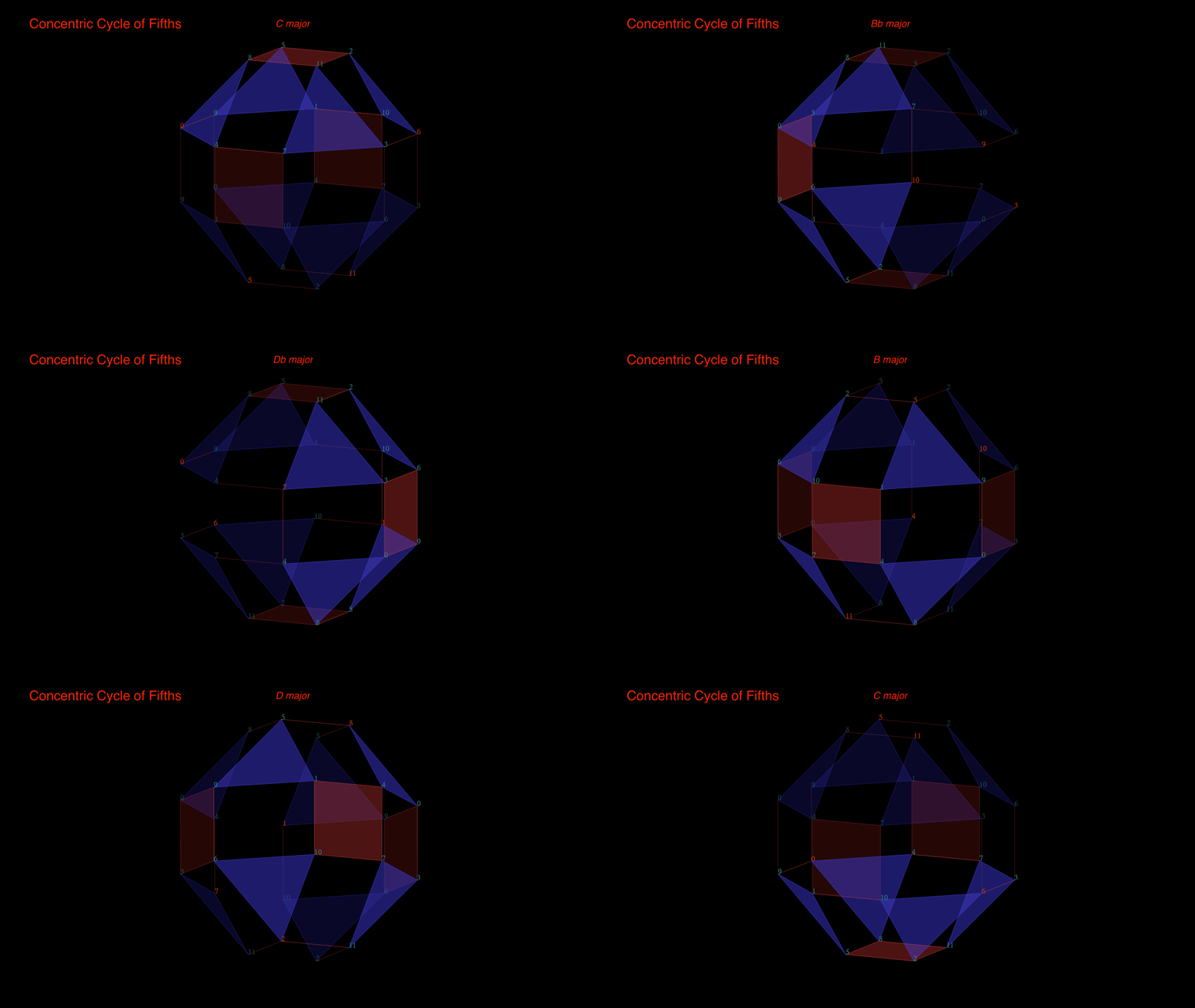
As a result, if we cycle around the rhombicuboctahedron in fifths we see a binary system where each note can be itself or its flat fifth —n.v. X or {(X+6) modulo 12 }.
fig.12e & fig.12f Concentric Cycle of Fifths
Planar Fifth Relationships
We've seen the 'relative' relationships on a plane; we will now look at the 'planar' relationships with regard to the fifths.
fig.13a Down A Fifth From C - Planar Fifth Relationships Between F & Bb
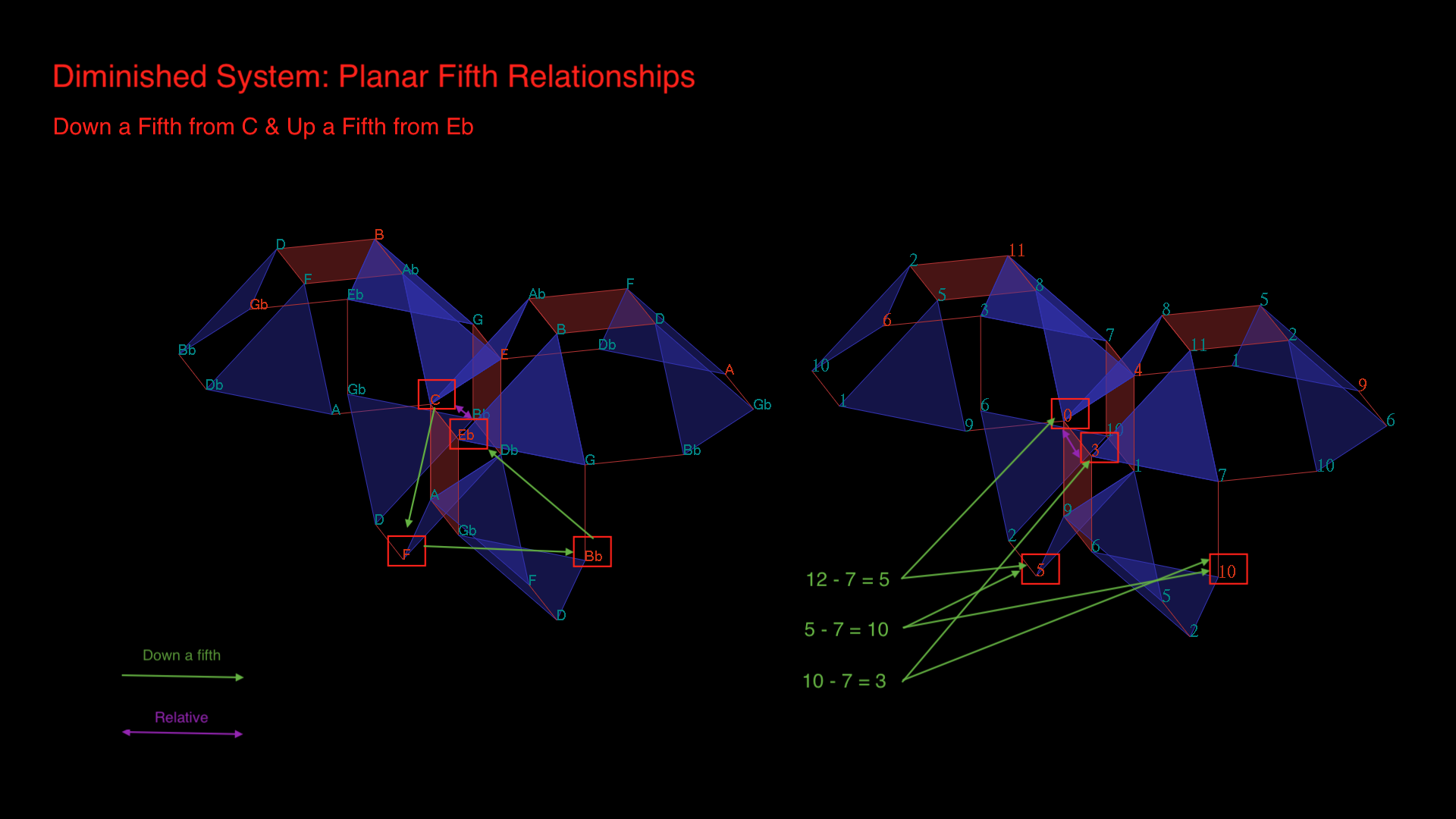
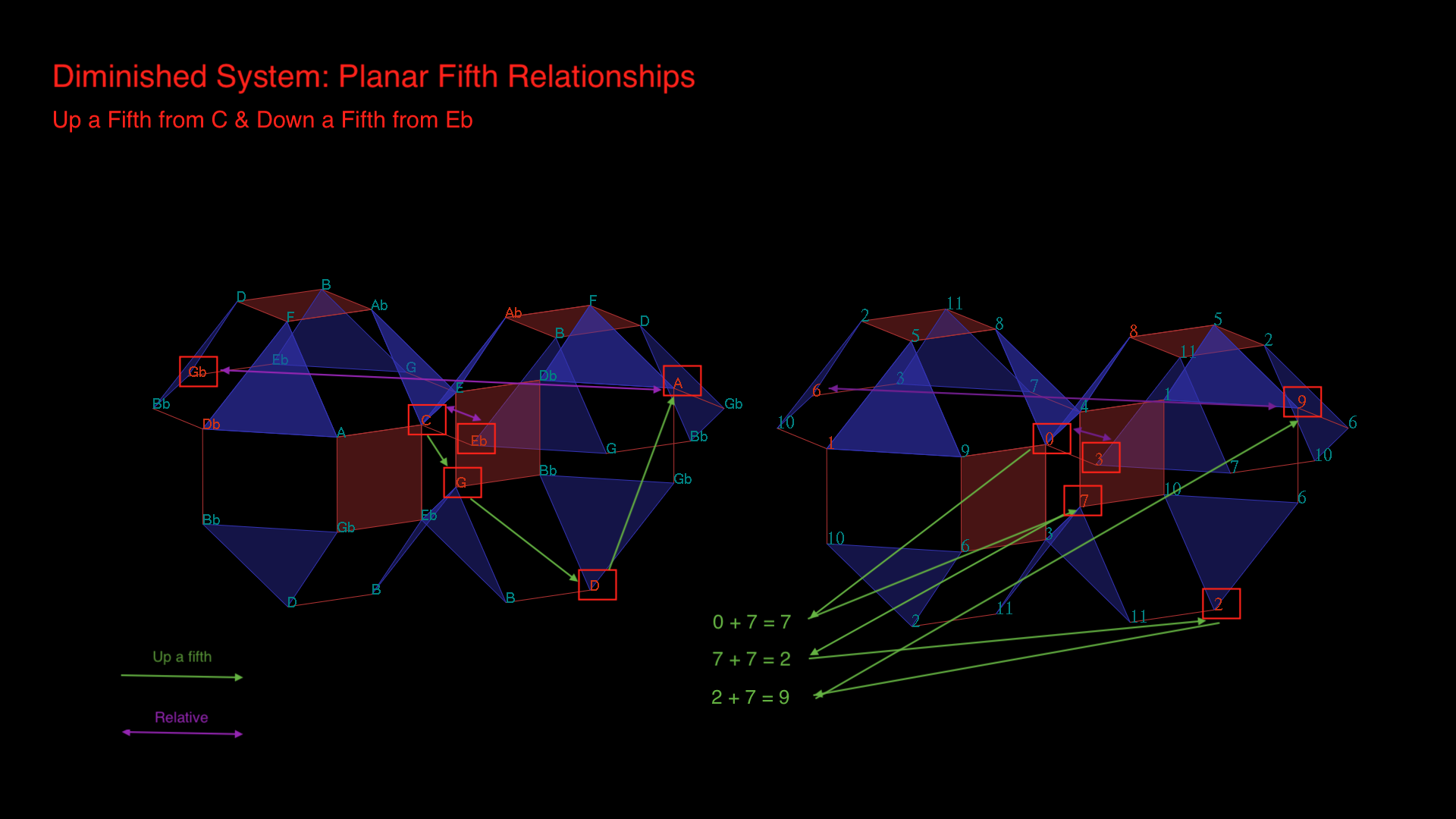
fig.13b Up A Fifth From C - Planar Fifth Relationships Between G & D